Vino Con Vista Italy Travel Guides and Events

Vino Con Vista | Traveler

Showing posts with label Italian wine. Show all posts

Thursday, October 25, 2012

A Taste of Tuscany - Walking Holidays in Italy

The Campo dei Miracoli ("Field of Miracle...
The Campo dei Miracoli ("Field of Miracles") ie Site. (Photo credit: Wikipedia)
By []Tony Maniscalco 
Wine and Walking in Italy There's more to the wine region of Tuscany than the much-coveted Brunello. The wine buffs would tell you that from the 1980's Tuscany has been producing new wines called Super Tuscans that have found international popularity. It's not uncommon to combine wine and walking in Italy into wine-tasting and walking holidays.

Sunday, November 20, 2011

A Quick Tour Of Italy - Central Sardinia

Buildings around Su Naraxi in Sardinia - Italy.Image via Wikipedia
If you are looking for a European tourist destination, consider the island of Sardinia, a region of southern Italy. Depending on your interests, this beautiful area can be an ideal vacation spot. You can get classic Italian food, and wash it down with fine local wine. Some parts of Sardinia remain undiscovered by tourists, while other sites are favorites of Italian and international jet setters and are priced accordingly. This article presents central Sardinia. Companion articles present northern Sardinia and southern Sardinia. Before we give you our itinerary you must realize that central Sardinia is hardly flatland. Sometimes to get from point A to point B you must pass by point C; the actual distance traveled may be much further than your initial estimate. Enjoy the trip, and drive carefully (or even better let the pros drive you.)

Wednesday, November 9, 2011

I Love Italian Wine And Food - A Vino Nobile Di Montepulciano From Tuscany

Sangiovese grapes in a vineyard of Montalcino,...Image via WikipediaI think that this wine's name, Vino Nobile di Montepulciano, is quite exciting, but perhaps it's just a case of marketing hype. The Lodola Nuova estate property has records going back to the mid Thirteenth Century. It has been producing wine since at least 1452. Its major vineyard is 87 hectares (about 215 acres) near the medieval village of Valiano. The property was purchased by the major Tuscany Ruffino winery about twenty years ago. Vino Nobile di Montepulciano is a well-known Tuscan red produced from the Prugnolo Gentile version of the Sangiovese grape. It is one of the Tuscany Big Three, Chianti Classico, Vino Nobile, and Brunello de Montalcino. Some say that it's a neglected middle child.


Friday, July 15, 2011

Italian wines conquer restaurants around the world

The DOCG seal on a bottle of Brunello di Monta...Image via Wikipedia
Author: Albapp

Italy is the country that produces the most wine in the world. Followed by France, Spain and the United States, it is one of the most recognized producers and a guarantee of quality that has earned its place in the best restaurants and wineries in the world.
Italian wines are actually one of the best options for restaurants all around the world when it is the time of composing a wine list since they are very food-friendly and has varieties for every kind of dish. Italy has, in fact, the largest range of wine varieties in the world, which means that almost any item in a restaurant menu can find a perfect match on an Italian wine. From French to Mexican cuisine, fine Italian wines are your safest bet.

Wednesday, January 19, 2011

Food And Wine In The Tuscany Districts

Oak barrels full of Chianti Classico wine in a...Image via Wikipedia
Author: Andrea Cardelli

There are some little facts that tourists and holiday makers to Tuscany need to know about the reputed food and wine that have made the Italian city a must-visit destination. It is well known among visitors and tourists to Italy that Tuscany has some of the Continent's finest cuisines and wines which are mostly used to entertain first-time visitors. Wine adds a special touch to any occasion that is worth celebrating. This explains why people from all over the world choose to travel all the way to Italy and specifically Tuscany, to celebrate special moments. As for Tuscany, it is not in any way different from other favorite tourist destinations in terms of relaxation spots but what makes it stand out is the unique taste of its dishes; making it an attraction to all comers.


Tuscany wine has an unrivalled reputation among all others in the region with a distinct flavor that makes it a favorite to many wine lovers all over Europe and globally too. Since wine is known to add color to all events being celebrated, it is only wise for one to make Tuscany a preferred holiday destination. There are multiple wine zones in Tuscany. Some of the most important of these wine zones include Chianti Classico, Bolgheri and Montalcino.


Friday, September 24, 2010

I Love Italian Travel - Tuscany Wine Touring

A close-up view of sangiovese grapes to be mad...Image via WikipediaWho has not heard about Tuscany? Its capital Florence is a living work of art, whose relatively small historic center contains far too many sites to list here. Where else you can find world-class jewelry in shops lining a bridge as they have been for centuries on the Ponte Vecchio? You might be surprised that Bistecca all Fiorentina, the local beefsteak, is excellent. Enjoy it with a Chianti or other fine Tuscan wine. Tuscany is a lot more than Florence. You may want to climb the Leaning Tower of Pisa and visit the partially walled city of Lucca, home to 99 churches. Or visit Florence's historic rival, Siena, which has retained its medieval flavor. Its Piazza del Campo is one of Italy's finest squares. Make sure to see the Palio, a historic horserace pitting the city's 17 neighborhoods against one another every July 2 and August 16. The Renaissance village of Montepulciano is best known for its Vino Nobile de Montepulciano DOC. Go to Saturnia to see some Etruscan and pre-Etruscan tombs. There's a whole lot more to see, for example, the region of Chianti.

What about the wine? Virtually everywhere you turn in rural Tuscany somebody is making fine wine. Most of it is red, but there are some great whites as well. Tuscany is home to Super Tuscans, wines that defied traditional wine making practices and regulations. They aren't allowed to carry Italy's fine wine designations. Many of these wines sell for much more than $100 a bottle, so successful producers are laughing all the way to the bank.

Sangiovese is the most widely planted red grape in Tuscany. It's the heart of Chianti DOCG (with and without the Classico refering to the traditional Chianti region), Brunello di Montalcino DOCG, and many others. Don't be confused; many Super Tuscans contain Sangiovese and sometimes no other grapes. Other quite common Tuscan red varieties include Cabernet Sauvignon and Merlot. The whites are simpler. The most common are Trebbiano, especially Trebbiano Toscano, and Vermentino. The famous Tuscan sweet wine Vino Santo is made from white grapes.

Companies that sell Tuscany wine tours include Prime Italy, Select Italy, and Alabaster and Clark Wine Tours Worldwide. Tuscany wineries that provide visits include Antinori in Firenze now in the agriturismo business, Avignonesi in Montepulciano, the organic winery Badia a Coltibuono in Gaiole in Chianti which offers a restaurant and lodgings, Barone Ricasoli in Gaiole in Chianti, and Ruffino in Pontassieve to name but a few. A few words of warning are in order. Be sure to check ahead of time for opening hours and whether English is spoken. Some of these places may charge admission; others may expect that you buy some of their products.


----------------------------------------------------
Levi Reiss has authored or co-authored ten books on computers and the Internet, but he prefers drinking fine Italian or other wine, accompanied by the right foods and people. He teaches classes in computers at an Ontario French-language community college. Visit his Italian travel website http://www.travelitalytravel.com which includes information on Italian wine and food.


Enhanced by Zemanta

Tuesday, September 14, 2010

I Love Italian Travel - Wine Touring In Lombardy

Lakeside promenade in Riva del Garda, Lago di ...Image via WikipediaSo you are planning to visit Lombardy, a region of northern Italy bordering on Switzerland, the Gulf of Taranto, and the Tyrrhenian Sea. Its regional capital and largest city is Milan, the center of Italian finance, fashion, and media. Lombardy is home to La Scala, the greatest opera house in Europe, or perhaps the whole world. And the Cathedral of Milan, ooh, la, la. You will find museums galore and the massive, impressive Galleria Vittorio Emanuele, an upscale Nineteenth Century shopping mall.
Small towns in Lombardy that are well worth visiting include Pavia which houses an important university, Cremona the historic center of violin making, and Mantua, where Romeo fled after killing Juliet's cousin. Its Palazzo Ducale contains 500 rooms one of which took a master seven years to paint. Save some time and money to visit the lakes. Lombardy doesn't border any sea but it's home to Lake Maggiore, Lake Iseo, Lake Orta, Lake Como, and Lake Garda which spills over into the neighboring regions of Trentino-Alto Adige and Veneto. Each lake has its own special attractions, as do the lakeside towns such as Bellagio, considered one of the loveliest towns in Europe, and honored by a hotel of that name in Las Vegas.

Lombardy is home to three DOCG wines. Franciacorta is produced near Lake Iseo between Bergamo and Brescia. This is Italy's answer to Champagne and priced accordingly. The rosé tends to cost more than the white. Sforzato di Valtellina and Valtellina Superiore are vinified from the red Nebbiolo grape locally known as Chiavennasca. Perhaps it's no surprise that these wines comes from western Lombardy not far from Piedmont. After all, Nebbiolo is Piedmont's signature grape. Just for the record Sforzato di Valtellina is made from dried grapes and often costs more than Valtellina Superiore. The best Valtellina Superiore wines tend to come from the rocky Sassella subdistrict.

The major white grape varieties include the local Garganega (the major componenent of Soave in next-door Veneto), Trebbiano di Lugana, Riesling Renano, and its cousin, Riesling Italico. International white grape varieties include Chardonnay and Pinot Bianco, the major components of Franciacorta. Regional reds include Barbera, Bonarda, Chiavennasca (Nebbiolo), and Lambrusco. Pinot Noir is found in Franciacorta and some other wines such as the high-volume Oltrepò Pavese DOC made in a wide variety of styles.

Companies selling regional wine tours include Prime Italy, Le Baccanti, Romantic Travel Destinations Getaway, and Wine Tour Italia. Regional wineries accepting visits include Berlucchi in Cortefranca, Cavalleri in Erbusco, and Sertoli Salis in Tirano. A few words of warning are in order. Make sure that you check ahead of time for opening hours and whether English is spoken. Some places may charge admission; others may expect you to buy some of their products.


------------------------

Over the years Levi Reiss has authored or co-authored ten books on computers and the Internet but simply prefers drinking fine Italian or other wine, with the right foods. He teaches a variety of computer classes at an Ontario French-language community college. Visit his Italian travel website http://www.travelitalytravel.com which includes information on Italian wine and food.


Source: http://www.submityourarticle.com

Permalink: http://www.submityourarticle.com/a.php?a=118897


Enhanced by Zemanta

Monday, July 12, 2010

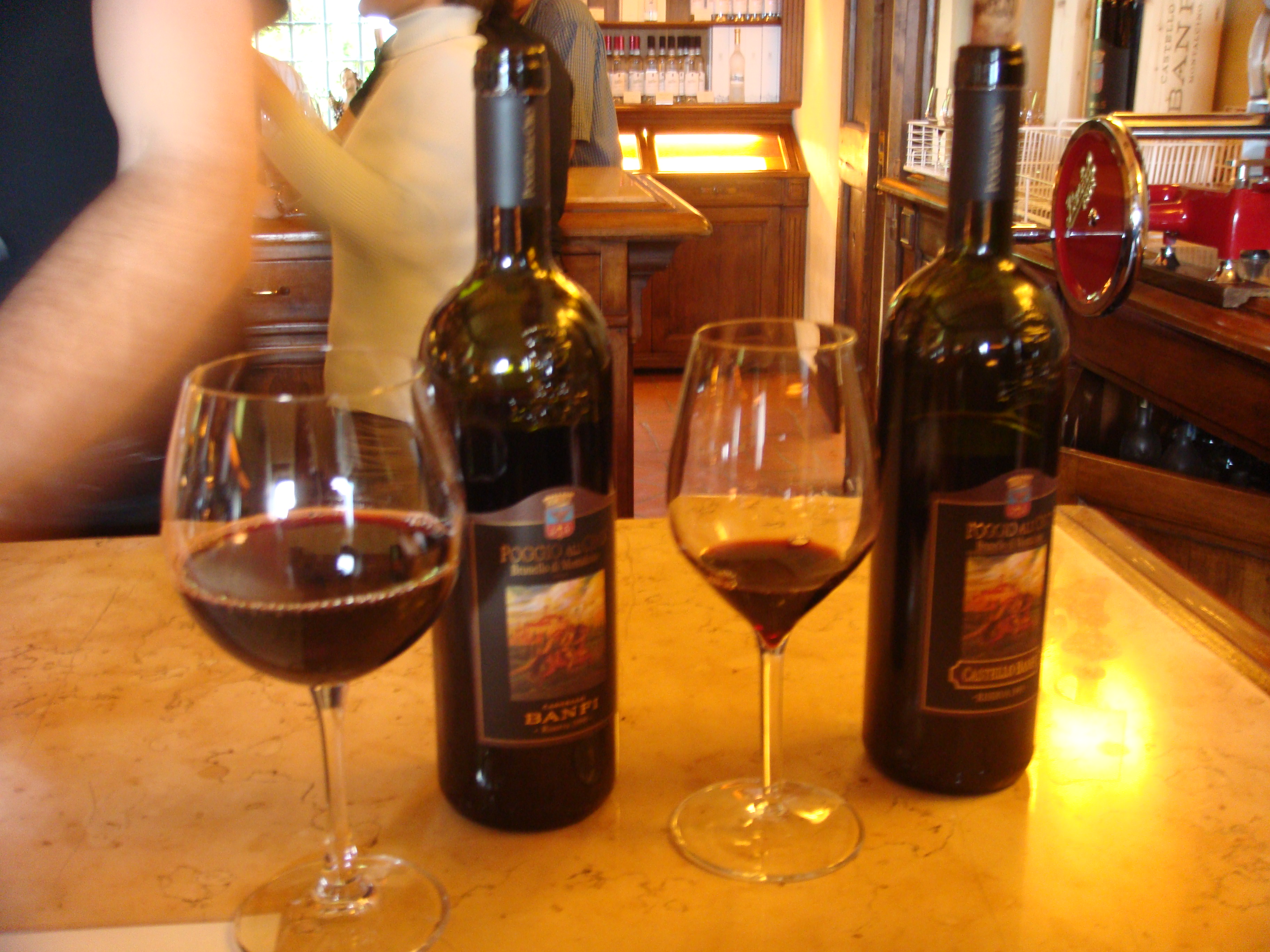
A Tuscan Winery Tour at Castello Banfi in Montalcino Italy


A close-up view of sangiovese grapes to be mad...
Image via Wikipedia
Tuscany is Italy’s quintessential wine region. It is the birthplace of one of Italy’s blockbuster red wines, Brunello di Montalcino. This  is an opulent wine made from sangiovese grapes. It has an intense ruby-red color and displays the complex aromas of black cherry, rasberry and violets.
Restrictive government regulations prescribe wine-making practices in Italy and define areas where specific wines can be made using the acronyms DOCG, DOC, and IGT.
Brunello di Montalcino is a DOCG wine which means  “Denominazione di Origine Controllata e Garantita” (the most prestigious/elite Italian wines).  This means that the wine has the following characteristics:
The location is certified and guaranteed
 Provides more stringent government regulations
Requires longer aging periods and lower yields per vine
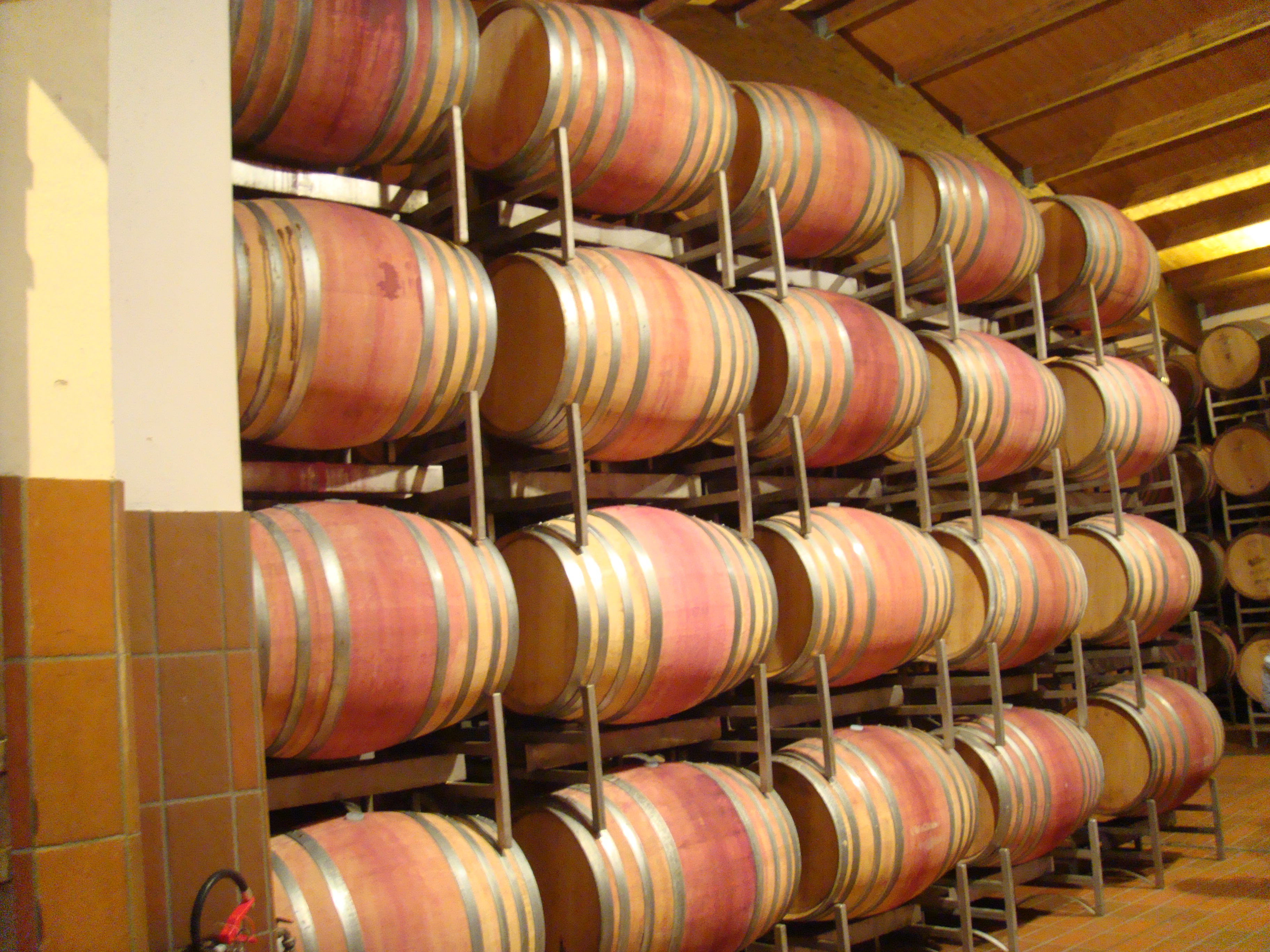
Brunello is Tuscany’s rarest and most expensive wine. It is produced in the walled medieval village of Montalcino, south of the Chianti Classico zone. The climate is warmer and the hills are steeper. The wine is aged longer and it must be aged in oak barrels to enhance the character of the wines.

The Banfi WInery was the first winery in the world to be awarded international recognition for exceptional environmental, ethical and social responsibility. It won the 2009 VinItaly International Award and has been designated Italy’s Premier Vineyard estate for 11 consecutive years.

The winery is nestled on 7100 acres of land and it is owned by two wine-making brothers from Long Island, New York.

They have a state of the art winery with a glass museum.

Taste their Brunello di Montalcino at the Winery’s Enoteca.


 Dine at their Tuscan Taverna
The restaurant is located in the vaulted cellars of the Castello. Enjoy three and five-course tasting menus of traditional Tuscan cooking on rustic wooden tables situated under gorgeous brick arches.

 You can even stay in the restored rooms and suites of the Castello Il Borgo.


To learn more about wine tasting in Tuscany visit www.vino-con-vista.com. Salute!!


Filed under: ebooks, Italy, Montalcino, Tuscany, vino con vista, World Heritage Sites Tagged: Brunello di Montalcino, Chianti, Italian wine, Italy, italy travel, Travel and Tourism, Tuscany, unesco, vino con vista, World Heritage Site
Enhanced by Zemanta

Wednesday, May 26, 2010

I Love Organic Wine - A Rose From Cote de Provence

A glass being full of rosé wineImage via Wikipedia

While Provence is known for many of the finer things in life, great wine is not usually part of the list. But its checkered wine history didn't keep me from trying this bottle produced in the Puget Ville area, part of the gold triangle of Cotes de Provence. La Sauveuse (the savior) refers to a local spring that is more than welcome in an area in which water is often in short supply. So maybe this part of Provence has everything.

OUR WINE REVIEW POLICY All wines that we taste and review have been purchased at the full retail price.


Wine Reviewed Domaine de la Sauveuse Cuvee Carolle Rose 2008 13.0% alcohol about $16.50

Let's start by quoting the marketing materials. A long-term organic producer, Domaine de la Sauveuse has also been increasingly incorporating sustainable agriculture and biodynamic ideas into its production techniques. So far, the winery has only received organic certification, but their passion for the other two schools of thought is deeply entrenched. This rose is filled with strawberry, cherry and citrus aromas and flavors. A terrific sipper, it is also a good match for a roast pork or grilled, herbed chicken breast. Our Quality Assurance Laboratory has determined that this wine contains 12 mg/L of free sulphur. And now for my review of this Cotes de Provence AOC wine based on Syrah, Grenache, and Cinsault grapes.

At the first sips the wine was very fruity with soft acidity. And I thought of Provence. The initial meal was a boxed vegetarian lasagna with Ricotta and Mozzeralla cheese that I slathered with grated Parmesan cheese. The wine was sweet with refreshing acidity. It was round, somewhat lemony, and fairly long.

The second meal consisted of zucchinis and onions stuffed with rice and lightly spiced ground beef on a bed of sliced potatoes. This rose had bright acidity. It faded and yet stayed, if you know what I mean. My glass held lots of strawberries and some sunshine.

The final meal included home barbecued skin-on chicken thighs and wings that had been marinated for two days in a fruity Thai barbecue sauce, accompanied by potato patties and a fresh, garden-style tomato. With the wings the rose was bright and acidic. With the more flavorful thighs the wine was light and refreshing but not very flavorful. The acidic tomato softened the wine somewhat.

Before tasting this wine with two cheeses I tried pairing it with Matjes herring. The wine was freshly acidic with strawberries. Herring and strawberries may not seem to go together, but this was actually a good combo, slightly sweet with soft tannins. With Asiago cheese the Cotes de Provence was almost mouth filling. It was round and balanced with good acidity. With a Swiss Emmenthaler the wine was light, almost too light. It was overpowered by the cheese.

Final verdict. I have no plans to buy this wine again. It was rather disappointing for the price. But it did come close. If you are committed to organic wines your decision may be different from mine.


Author Resource:-> Levi Reiss has authored or co-authored ten computer and Internet books, but definitely prefers drinking fine French, German, or other wine. He teaches classes in computers at an Ontario French-language community college. His global wine website www.theworldwidewine.com features a weekly review of $10 wines and new sections writing about and tasting organic and kosher wines. Visit his Italian wine website www.theitalianwineconnection.com .

Article From Article Storehouse

Search Amazon.com for vino con vista


Reblog this post [with Zemanta]

Saturday, May 22, 2010

I Love Touring Rome, Italy - Hotels In The Esqualino District

Piazza Esquilino with Basilica di Santa Maria ...Image via Wikipedia


I Love Touring Rome, Italy - Hotels In The Esqualino District

The Esquilino area of southeastern Rome is named for the Esquiline hill. This lovely area is known for some special churches including the Basilica of Santa Maria Maggiore dating back to the Fifth Century, which contains mosaics and marble columns from that era. It is the only one of the four Roman Basilicas retaining the original structure. It sits on a Piazza of the same name. The Egyptian obelisk in the Piazza's center comes from the Emperor Augustus's mausoleum. When you tour the Ninth Century Santa Prassede Church note its frescoes and coffered ceiling. The Palazzo Brancaccio, completed in 1912, making it the last noble palace built in Rome. It hosts the National Collection of Oriental Art. The Piazza Vittorio Emanuele is the largest Piazza in Europe. So if ever direction givers say you can't miss it, they are right. For your convenience we have listed neighborhood hotels in approximate order of cost, starting with the least expensive. We have personally verified all website addresses making sure that they include English-language pages.

The Bed and Breakfast Cialdini Inn is on the fourth floor of an elevator serviced building right in the heart of this area. It is very close to the Termini Station. For some reason the Inn's prices vary almost daily, but in general they are quite reasonable by Roman standards. There are two rooms that were renovated in 2007 and a lovely garden. The address is Via Enrico Cialdini, 14 - 00185 - Rome.

The Hotel Santa Prassede has twenty rooms, singles doubles, triples, and quads, in an independent building. Its reception area is open 24 hours a day. There is a breakfast room. They advertise themselves as one of the best two star hotels in Rome. The address is Via di Santa Prassede, 25 - 00184 - Rome.

As you might guess from its name, the Hotel Antico Palazzo Rospigliosi is located in a historic palace, one built in 1585. Their website contains lots of interesting information describing the building's owners over the centuries. This brand new four-star hotel is located next to the Basilica of Santa Maria Maggiore. Its courtyard has a pond and a fountain and the hotel boasts a bar, a restaurant, and a conference room. There are 39 rooms, most with a courtyard view. Some of its rooms overlook the Basilica. When you relax in the reading room remember that it was once a Cardinal's living room. The address is Via Liberiana, 22 - 00185 - Rome.

The Hotel Gallia is situated in a majestic Nineteenth Century palace quite close to the Basilica. It has facilities for the handicapped, a reading room, a bar, and a panoramic terrace. It offers single, double, and triple rooms. The address is Via di Santa Maria Maggiore, 143 - 00185 - Rome.


------------------------

Over the years Levi Reiss has authored or co-authored ten books on computers and the Internet but simply prefers drinking fine Italian or other wine, with the right foods. He teaches a variety of computer classes at an Ontario French-language community college. Visit his Italian travel website http://www.travelitalytravel.com which includes information on Italian wine and food.


Source: http://www.submityourarticle.com

Permalink: http://www.submityourarticle.com/a.php?a=100216


Reblog this post [with Zemanta]

Thursday, April 8, 2010

Kyle Phillips's Italian Wine Review

Kyle Phillips's Italian Wine Review (IWR): Wandering Puglia: After I Pastini.... All Sorts of Reds!


This was one of the first times a group of Apulian winemakers had come to another winery with their wines, and from our standpoint it was a wonderful thing, because it allowed us to taste many more wines than we might otherwise have been able to.


Reblog this post [with Zemanta]

Tuesday, March 23, 2010

A Wine Fan's Look at the Wines of Campania, Italy

MastroberardinoImage of Mastroberardino via Snooth


The wines of Campania, Italy, offer wine lovers a fascinating history in addition to delicious taste. Consider featuring these wines at your next dinner party. As you pour the wine into the glasses of your guests, share the winemaking history of the area along with wines from some of the notable wineries continuing the traditions of Campania. This article provides a look at the wines of this region, providing information you can share with your guests.


Campania, Italy

The capital of Campania, Naples, was founded by the Greeks, enlarged by the Romans, and subsequently invaded by the Normans, Hohenstaufen, French, and Spanish among others. Established by the Greeks in the 11th century BC, Naples was the earliest of a cluster of far-flung settlements throughout southern Italy. Many important figures of the age, including Pythagoras, Archimedes, and Aeschylus lived in these settlements and today some of the best ruins of the ancient Greek world can be found there.

Along with mathematics, architecture, and drama, the ancient art of winemaking also flourished in the hills and valleys of the region as the cult of Dionysus spread. Aglianico and Greco, vines the Greeks introduced, are still highly prized. The Greek historian Herodotus called this part of Italy Oenotria, the land of wine.

In the 16th century, Sante Lancerio, the bottler of Pope Paul III, raved about the wines of the Kingdom of Naples and their reputation continued into the 19th century. Subsequently, viticulture went into decline for decades as growers left the land and the majority of remaining producers ignored DOC regulations and instead chose to plant prolific vines rather than those that would produce premium grapes. In the last twenty years, producers have once again recognized the potential of southern Italy in general and have modernized their viticulture and winemaking techniques.

Fiano di Avellino and Greco di Tufo are among Italy's most distinguished white wines prized by Italian wine clubs, while Taurasi from Aglianico has been called the "Barolo of the South" because of its aging ability. This is Campania's only DOCG wine to date. Mastroberardino is a distinguished winery in the region as is Feudi di San Gregorio, Villa Matilde, Mustilli, and Casa d'Ambra.

Mastroberardino

This extraordinary family is responsible for rescuing Campania's ancient grape varieties from extinction. Without the family's efforts over 130 years that the winey has officially existed, Fiano, Greco di Tufo, and the noble Aglianico would probably have been only historical references in the writings of Titus Livius and Pliny the Elder. Aglianico is now produced throughout Campagnia in Taburno, Irpinia, and Sannio, but its greatest expression comes from Taurasi and is known as the "Barolo of the South" because of its extraordinary flavors and ability to age. Headquartered in Altripalda about 40 miles northeast of Naples in the center of the Irpinia wine making region, Angelo Mastroberardino first registered the company in 1878 at the Chamber of Commerce in Avellino. Today, his great grandson Piero Mastroberardino is the current President.

The family's devotion to ancient grape varieties was recognized by the Italian government, which commissioned it to replant the vineyards around Pompeli and match the grapes originally growing there before eruption of Mt. Vesuvious in 79 AD.

Feudi di San Gregorio

Feudi di San Gregorio is another one of Campagna's finest wine estates. Owners Vincenzo Ercolino and Mirella Capaldo recently purchased vineyards in Puglia and Basilicata to further explore the noble grapes of southern Italy. Situated in the tiny village of Sorbo Serpico in the Irpinia region, the estate was established by Ercolino and Capaldo in 1986. They have aggressively tapped into the enormous potential of Campania's unique terroir and ancient varietals, such as Fiano di Avellino, Greco di Tufo, and Aglianico. In addition to its own vineyards, the winery sources grapes from the finest vineyards set in the rolling hills of the Irpinia region, located near Mount Vesuvius. The volcano's legendary eruptions have sandstone and marl soils with mineral-rich deposits of volcanic ash, forming a unique composition that imparts highly distinctive aromas and flavors in the grapes.

Regardless of which of these favorite wines of Italian wine clubs you choose, the long, interesting history of the area and these wineries will enhance the wine tasting experience of your guests.

Chris Harmen is an author for the popular wine of the month club, Celebrations Wine Club. Celebrations Wine Club is a favorite among wine lovers who appreciate the quality choices of America's leading California wine clubs and Italian wine clubs.

Article Source: http://EzineArticles.com/?expert=Chris_A._Harmen
Search Amazon.com for Vino Con Vista

Reblog this post [with Zemanta]

Monday, March 22, 2010

A Moderate Priced Chianti

This picture was reworked by the Fotowerkstatt...Image via Wikipedia I Love Organic Wine - A Moderate Priced <a class="zem_slink freebase/en/chianti" href="http://en.wikipedia.org/wiki/Chianti" title="Chianti" rel="wikipedia nofollow">Chianti</a>

I Love Organic Wine - A Moderate Priced Chianti


By: Levi Reiss

We have reviewed many Italian wines and at least two Chiantis, one running about $20 and another at half the price. As you may know, Chianti has evolved over the years and what was once considered a mere table wine now shares Italy's top wine designation with both great and not so great wines. This Chianti has broken with tradition; it is made from organic grapes and is not aged in barrels. Furthermore, it is Certified Organic by the Italian agency ICEA, Instituto Certificazione Etica e Ambientale (Institute for Ethical and Environmental Certification).


The producer La Castellaccia is located in Tuscany halfway between Florence and Sienna. They use organic fertilizer and the grapes are hand picked. Check out their website for more information on their production process. Interestingly enough these people also run a stud farm for a horse breed that originated in Turkmenistan.

OUR WINE REVIEW POLICY All wines that we taste and review are purchased at the full retail price.

Wine Reviewed La Castellaccia Chianti Colli Senesi 2007 13.7% alcohol about $15.50

Let's start by quoting the marketing materials. Description: Our Quality Assurance Laboratory has determined this wine contains 25 mg/L of free sulphur. Tasting Note: Generous and finely made using traditional Chianti grapes of Sangiovese, Canaiolo and Ciliegiolo, from the Siena hills, this Chianti breaks with tradition by using no oak ageing. There are intense aromas of blackberry, blueberry and spice. Dry, excellent fruit core with an equally impressive freshness for balance. Full-bodied with a long fruit-forward finish. Almost New World in style. Enjoy with spaghetti and meatballs. (VINTAGES panel, Nov. 2008) And now for my review.

The first sips indicated quite a bit of fruit. There didn't seem to be any tannins. The initial food pairing involved an overcooked commercial barbecued chicken breast, a tomato and garlic salsa, and potatoes roasted in chicken fat. In the presence of the meat the wine was a bit thin but spicy. With the salad the wine's fruit started to come out. In the presence of the potatoes the wine's acidity was brushed with harshness but I did taste some black cherry.

The second pairing involved slow-cooked beef ribs with sliced potatoes. The Chianti was harsh and not at all round. There was some tobacco but I also noticed an aftertaste. I swirled the wine vigorously to get rid of the aftertaste but then the Chianti became thin. When I added some jalapeno sauce to the meat the wine actually improved, showing more fruit.

The final meal centered around a Middle-Eastern specialty kube, also called kibbeh. This is ground beef in crushed bulghar jackets with an acidic broth containing Swiss chard. I tasted some tobacco and the wine was fairly round, but thin.

Probably the best part was the cheese pairings. When tasted with a yellow cheddar, the Chianti was round and fruity. The tannins weren't present. With a Swiss emmenthaler the wine picked up a bit.

Final verdict. I would not buy this wine again. Except for the cheese, the pairings were not quite up to snuff. The bargain Chianti was better, independent of the price. Maybe I miss the oak.


Author Resource:->


Levi Reiss has authored or co-authored ten computer and Internet books, but really prefers fine Italian or other wine, with good food and company. He loves teaching computer classes at an Ontario French-language community college. His global wine website www.theworldwidewine.com features a weekly review of $10 wines and new sections writing about and tasting organic and kosher wines. His Italian travel website is www.travelitalytravel.com .

Article From Article Storehouse

Search Amazon.com for Vino Con Vista


Reblog this post [with Zemanta]

Wednesday, March 17, 2010

I Love Touring Italy - Springtime In Liguria

Comune di Santa Margherita LigureImage via Wikipedia

Little Liguria in northeast Italy is the Italian Riviera. It faces the Ligurian Sea and its climate starts to warm in the early spring. To avoid crowds plan on a spring visit. You won't regret it. The Yacht Club of the upscale resort of San Remo, population under 60 thousand, lying about 90 miles (145 kilometers) southwest of Genoa hosts the International Italian Dragon's Cup in late March. While the entry fee is a mere 250 Euros (less than 400 dollars per boat), you do have to provide proof of insurance against claims for a minimum of one million Euros. In spite of the fact that this race is held in Italy, English is the official language of this Regatta. So maybe I will reconsider and you'll see me there.

The towns of Rapallo population about 34 thousand and Santa Margherita Ligure population about 10 thousand, and the village of Portofino population about 500, are close to each other and some 20 miles (30 kilometers) east of Liguria's capital, Genoa. In April they get together to host Cartoons on the Bay, the International Television and Multimedia Animation Festival. The 2010 edition, number 14, takes place between April 15 and April 18. Actually most activities are held in Rapallo and the closing dinner is in Portofino. The program is divided into activities for cartoon professionals and for the general public. The Seventeenth Century Villa Durago in Santa Margherita Ligure offers seminars to industry professionals. But even if you're an amateur you should visit this beautiful Villa and the surrounding city. Try to catch the San Giorgio Bonfire on the 23rd of April in the Portofino Piazzetta. By the way, you are advised to stay in the other two cities rather than in even pricier Portofino, even during the off-season.

In early May Liguria's capital, the port city of Genoa, population about 600 thousand holds a celebration of the seas that they call Slow Fish. There is a traditional fish auction, demonstrations on how to cook fish and seafood, and lots to eat. Save room for traditional Genoa desserts. This program is associated with the Slow Food Movement that concentrates on food quality and protecting the environment.

The coastal city of Camogli, population about 6 thousand is located 12 miles (20 kilometers) east of Genoa. Their Sagra del pesce (Fish festival) is held each year on the 2nd Sunday in May to celebrate the feast of St Fortunato the patron saint of fishermen. A unique feature is the monster frying pans (we're talking about 12 feet or 4 meters in diameter) that cook fresh fish in the open on the last day of the festival. Everyone, and we're talking thirty thousand participants, gets fried fish and it's free. Make sure to taste the "Camogliesi" pastry balls filled with rum-flavored custard.


----------------------------------------------------
Levi Reiss has authored or co-authored ten books on computers and the Internet, but he prefers drinking fine Italian or other wine, accompanied by the right foods and people. He teaches classes in computers at an Ontario French-language community college. Visit his Italian travel website http://www.travelitalytravel.com which includes information on Italian wine and food.


Reblog this post [with Zemanta]
Search Amazon.com for Vino Con Vista

Wednesday, March 10, 2010

I Love Touring Italy - Springtime In The Marches

the portal of San Francesco church in AnconaImage via Wikipedia

The Marches is a narrow region of central Italy that lies on the Adriatic Sea. Its capital and largest city, Ancona, population 100 thousand is a seaport in the middle of the region. This is the real, traditional Italy. Like many parts of Italy, the region warms quickly during the spring months. You may want to start your spring vacation in The Marches in the town of Porto San Giorgio, population about 16 thousand, about halfway down the Adriatic coast from Ancona. On the third weekend of March this city is host to a Food Festival of typical regional products. There are literally hundreds of stalls and stands. One of the best wines in this region, the Rosso Conero Riserva DOCG comes from this area.

Search Amazon.com for Vino Con Vista

The city of Fermignano, population 8500, located about 40 miles (70 kilometers) west of Ancona, holds the Golden Frog Race (Palio) on the Sunday after Easter. This means April 11, 2010 and May 1, 2011. In this race human competitors must keep their tiny racing frogs from leaving their wheelbarrows. This frog racing tradition seems to have started just over four hundred years ago. After this late afternoon race there is a historical, costumed pageant and then fireworks. I certainly wouldn't ask for frogs legs at a local trattoria. During the final week of April the city of Marotta di Mondolfo, population about 11 thousand, situated approximately 25 miles (35 kilometers west of Ancona) hosts the Sagra dei Garagoj food festival. "Garagoj" in the dialect signifies a special fish cooked by local fishermen on the beach. You might want to accompany this fish with a Verdicchio dei Castelli di Jesi DOC or a Verdicchio di Matelica DOC white wine but be careful, their quality varies greatly. On the first Sunday in May, the town of Tolentino, population about 20 thousand presents the historic Le Marche Festa. This military pageant recreates the Napoleonic period in its nearby Castello della Rancia commemorating the 1815 battle that some call the first battle in the war for Italian independence. The town of Camerino, population 7 thousand, about 25 miles (40 kilometers) southwest of Ancona, holds the Fifteenth Century Le Marche Festa between the first and second weeks of May that coincides with the festival of its patron saint, San Venanzio. This celebration features food, games, and wine. One highlight is the Corsa alla spada in which competitors race up the town's wonderful steep alleys and streets. Don't miss the Giostra della Quintana (historical jousting tournament). I can't promise you any Fifteenth Century wine. ----------------------------------------------------Levi Reiss has authored or co-authored ten books on computers and the Internet, but he prefers drinking fine Italian or other wine, accompanied by the right foods and people. He teaches classes in computers at an Ontario French-language community college. Visit his Italian travel website http://www.travelitalytravel.com which includes information on Italian wine and food.


Reblog this post [with Zemanta]