Vino Con Vista Italy Travel Guides and Events

Vino Con Vista | Traveler

Showing posts with label Roman. Show all posts

Sunday, June 2, 2013

Must See in Rome - The Roman Forum

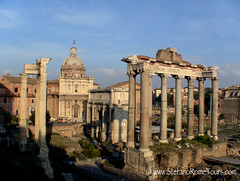
Roman Forum
Roman Forum (Photo credit: StefanoRomeTours)
By Eric Simon

It is said that Rome wasn't built in a day. The magnificent structures as well as the ruins speak volumes of its glorious history. It has the richest and the fullest history evidenced by anyone so far. It is colorful and the most appealing of all travel destinations. This is one place where the past and the present go hand in hand. Here you can try to follow the tourist's path or try and go off the track, if you are brave enough to. Either way, Rome is going to amaze and surprise you. This is one city which has plenty to offer, but its beauty has been blurred by the passing time.

5 Top Historical Monuments in Rome

Though in ruins, the Flavian Amphitheatre, now...
Though in ruins, the Flavian Amphitheatre, now known as the Colosseum, still stands today (Photo credit: Wikipedia)

By Preety Gupta

Rome is one of the most popular tourist destinations in Italy. It is home to several historical monuments some of which can be seen for free while others require cards and passes. Most of these ancient monuments are located in the city's historic centre and so there are several places that you can visit in a single day. Even if you don't have time for an in-depth look, you will find walking past them an incredible experience. Over the past few years, some of these monuments have been renovated to make them more user-friendly. Here are just some of the historical monuments that you may wish to see while in Rome.

Tuesday, March 19, 2013

10 Must-See Attractions in Valencia

Porta apòstols seu València
Porta apòstols seu València (Photo credit: Wikipedia)

Author: Austin Ortiz
Valencia is packed with attractions. A city that was founded by the Romans and prospered under the Moors and the Catholic Monarchs is one of the most attractive cities of Spain. Here marvelous medieval buildings share space with modern surrealist structures, creating a city that boasts of architectural diversity. The scene of Spanish art and culture, Valencia is the perfect destination for experiencing the vibrant Spanish life.

Must-See Attractions in Valencia

Sunday, October 28, 2012

Walking in Italy: Exploring Rome on Foot

A 5x5 segment panorama taken by myself with a ...
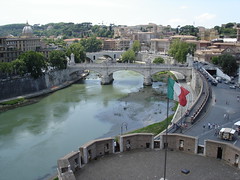
 (Photo credit: Wikipedia)
By []Tony Maniscalco

Rome is fairly packed with ancient and classic sights for the eager visitor to discover and explore. From basilicas to squares and ancient structures to eye-catching fountains, you will most certainly never be bored when you visit this beautiful city. Walking in Italy really does come into its own when you decide to explore the capital on foot, and around every corner will be something new.

Saturday, October 20, 2012

Walking in Italy's City of Stone - Pompeii

House of the Faun in Pompeii, Italy
House of the Faun in Pompeii, Italy (Photo credit: Wikipedia)

By []Tony Maniscalco

There are many people who go walking in Italy for the sights and cultural experiences on offer - however, there are others interested in discovering Italy's history while on foot. One of the most interesting events to have befallen the ancient occupants of Italy was the eruption of Mount Vesuvius, and the annihilation of Pompeii. Many scholars of ancient history are interested by the volcanic eruption and the remains of the city that can be discovered to this day. Whether you have a passing interest or you're a keen historian, the tale of Pompeii is absolutely fascinating.

Wednesday, August 1, 2012

Pantheon, the Glorious Pagan Temple of Rome

Pantheon, RomaPantheon, Roma (Photo credit: Wikipedia)


Author: Jacob

The Pantheon is an ancient temple in Rome. It is also known as the "temple of all gods". Astounding architectural design combined with its rich history makes it a famous tourist destination.
Very few architectural master pieces get the attention the Pantheon gets. A "temple of all gods", this work of genius has fascinated human imagination for centuries now. If you are visiting Rome don't miss visiting this pagan temple. A fine example of glorious Roman architecture, it's a reminder of the splendid days in Roman history.

Thursday, May 10, 2012

The Melodies of Sardinia

SardiniaSardinia (Photo credit: giannisl)The Melodies of Sardinia By Helen Forbes
When you arrive in Sardinia, you might just hear an unfamiliar tune or two as you explore the area around your villa. In Sardinia, travellers will almost certainly notice many kinds of unique musical pieces and musical instruments that they may not be immediately familiar with. Sardinia is one of the most culturally distinct regions of Italy, and so too it is musically distinct. There is plenty to discover for those musically-inclined visitors. If you hear a few stray snatches of melody while exploring the towns of Sardinia, why not stop and listen for a little while? It could well be the soundtrack for a wonderful memory of your trip.

Tuesday, April 10, 2012

Are You Soccer Mad?Soccer Crazy? Then try these Rome Soccer Tours

Stadio Olimpico in RomeStadio Olimpico in Rome (Photo credit: Wikipedia)Are You Soccer Mad?Soccer Crazy? Then try these Rome Soccer ToursBy Les Sheppard


If you are fanatical about soccer, as you read through this article you're going to learn that it's easier than you think to travel to Rome, and see a classic soccer match, with the fans of Roma or Lazio at your side. Wouldn't it be amazing to tell your friends that you were there, in the Stadio Olimpico, when the winning goal was scored!
Whether you are coming to Rome on vacation or business, you simply have to experience the thrill of a football match! Rome soccer tour packages give you tickets to AS Roma or SS Lazio home games, hotel accommodation and breakfast daily. But don't delay, tickets sell out quickly because both teams attract fanatical support.
The Stadio Olimpico is home to both Roma and Lazio and was built for the 1960 Olympic games. An impressive 82,000 plus venue it has housed European Cup Finals and the 1990 World Cup Final. It is also the first choice home of the Italian national team, and a great venue for these Rome soccer tours.

Friday, March 30, 2012

Eating Out in Rome

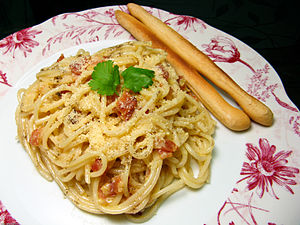
Spaghetti alla Carbonara.Spaghetti alla Carbonara. (Photo credit: Wikipedia) By Aidan Fitzgerald


Italian Food...
What is it that makes Italian food so unique? Well, it's exceptionally varied and every area in Italy has its own specialties. The North tends to use more cream, butter and parmigiano cheese while the south prefer to use olive oil, dried pasta, mozzarella and pecorino (sheep milk) cheeses. The pizza bases in Rome are very thin while the Sicilian pizzas are much thicker.
Don't worry about making a mess, as it can be quite hard to eat gracefully when in Rome! No one cares if you've dribbles of spaghetti or toppings of floppy pizzas around your chin! Just be sure to dab it off when the meal is over!
Mealtimes...
Breakfast - the most important meal of the day? The Romans don't agree! It's not really a big thing in Rome but instead; they make lunch the main meal of the day. They normally keep breakfast light with your typical morning fare consisting of a cappuccino, some sort of sweet pastry or just a shot of espresso coffee. Breakfast usually isn't eaten at home; instead Romans pop into one of the many coffee shops that line the city's streets.
Romans see lunch as the big meal! A typical meal begins with an antipasto - this is a type of starter, which can be hot or cold.
Then you'll have a primo piatto, which is a first course. Rice, risotto, pasta or other carbohydrates are popular choices!
The secondo piatto is your second and main course, with meat or fish being the main constituent. It's said that veal, pork and chicken are the most popular among Rome's citizens. This second course is usually served with a side dish consisting of either vegetables or a salad and then fresh fruit. This side dish is called the contorno. Sometimes a light dessert is had after the secondo. The Italian word for dessert is dolce. The meal is brought to a close with a coffee - caffe - or a strong liqueur.
Dinner was never a big thing but now it's similar to lunches. It's never eaten before 8.30 and you'll often see people sitting down to a four course meal as late as eleven o clock!
Rome's specialities...
Most of us are familiar with the Italian specialities pizza, spaghetti alla carbonara and even lasagne. All of these have been adopted into the western world but only in Italy itself will you get the authentic taste of these! Be sure to enjoy pizza from one of Romes array of top pizzerias.
In Rome a wide range of recipes can be found. These are just a few popular ones that you'll see in original Italian restaurants. Veal escalopes with ham, 'saltimbocca'; the famous Roman tripe; as well as a delicious plate of roast lamb seasoned with rosemary and thyme, 'abbacchio alla romana'. Ham is eaten together with figs, and there is a wide choice of vegetables including peas, asparagus and artichokes
A typical Roman menu contains the essential bruschetta, which is grilled bread cut into finger sized slices and is marinated in fine olive oil and garlic. There are many classic pasta dishes such as spaghetti bolognese, bucatini all'amatriciana and bucatini cacao e pepe. Choosing what you want from the restaurants menu will be the hardest decision. My advice is to go for something different, after all it's not everyday that you're in Rome!
Wine...
If your can't tell your chardonnay from your sauvignon blanc, I can't think of a better place to introduce yourself to wine than Rome. Italy has the best variety of Vino, ranging through nearly every colour, flavour and style imaginable. From well known Chiantis to rustic Pinot Grigio's, Italy's wine's are renowned to be the finest in the world.
For Italians themselves wine is food and no mealtime is complete without a glass of a fine white to accompany foul and fish, or maybe a sultry red to add to the flavour of a well seasoned pasta.
Italians waiters are among the finest in the world and will be glad to give you a taste of various wines before you choose which one you'd like to have to accompany your meal. And, if you're going to be really adventurous, why not enjoy a dessert of red wine and a selection of fine Italian cheeses, like Bel Paese, Gorgonzola and Romano.
Rome's best places to eat...
Wondering where to dine? Well Rome has loads of restaurants to choose form so you'll be spoilt for choice here!
If you see a place packed with locals, you know it'll be good, as the Italians love their food! You'll find a lot of restaurants are quite expensive, most commonly in the popular tourist areas like Piazza Navona and the Pantheon. If you're on a budget, avoid these as they are over priced and the food is just as good in other areas of the city.
On the other hand, there are many decent and reasonably priced eateries near by. The most popular areas being Campo dei Fiori, Trastevere, Via di Tor Millina (you'll find it just off Piazza Navona) and Via del Goveno Vecchio.
Popular restaurants include the Papa Re restaurant located in the Trastevere area (it boasts genuine recipes from Rome) or Dar Poeta, who're renowned for their pizzas.
If your looking for a vegetarian option, Marguta Vegetarian Restaurant is extremely popular and it is located at the corner of the Via Margutta.
Prices...
If all you want is a tasty authentic pizza and a beer altogether it'll cost about �15.
If your dining Italian style, your typical three course meal can vary in price - it all depends on where you eat. At a midrange restaurant, a three course meal could cost about �30 and in a top restaurant the price ranges from �50 upwards.
Know before you go!
Tipping is not essential - it's your own choice but the least you can do is round up the bill. The Italians usually don't leave a tip but the tourists are expected to (about 5% of your bill in pizzerias and 10% in top restaurants).
Opening Hours in Rome...
The opening hours vary from restaurant to restaurant and waiting for a table is not unusual! The best way to get a table is by arriving before 8.30pm or later than 10pm.
Restaurants tend to open for dinner at about 9pm but in tourist's areas, doors' opening at 7pm is a common practice. Lunches are the main meal of the day and normally served from about 12.30pm to about 3pm.
Ready to dine in Rome...
So now you've read this article you should be ready to face Romes restaurants! A big part of your holiday in Rome will consist of consuming superb foods and gorgeous wine! Remember the most important thing is to choose foods you like to eat while embracing Roman tradition at the same time.
Whatever your individual interests are when visiting Rome; you're guaranteed to come across a restaurant that you'll love! Ciao!
Aidan writes for top travel and accommodation website PlacesToStay.com
Visit PlacesToStay.com to book a wide range of carefully selected hotels in Ireland, Europe and throughout the world at great value prices!
Heading to Rome soon? Then check out our Rome Hotels page for a comprehensive range of budget, mid range and luxury hotels in Rome.

Article Source: http://EzineArticles.com/?expert=Aidan_Fitzgerald


http://EzineArticles.com/?Eating-Out-in-Rome&id=3853832


Enhanced by Zemanta
E-Book

PrintBook

Tuesday, March 6, 2012

Top 10 Restaurants in Rome - Dining in Elegance

Spaghetti all' arrabbiataImage via WikipediaBy Sarah Dudleymore


1). Agata & Romeo:Is a family based restaurant that has been around for three generations serving traditional local Roman cuisine. Its large collection of different types of wine to delicious. Romeo is an expert sommelier (more than 1500 labels in his cellar), he can help you select the appropriate wine to best match your desired meal. Agata is the chef known for her delicious unique recipes of her traditional Roman dishes.
Cuisine: Italian, European
Opening Times: Monday-Friday 12.00pm-3.00pm, 7.00pm-11.30pm, Closed: Saturday/Sunday
Location: Via Carlo Alberto,45
2). Checchino da 1887:This is another perfect example of traditional Roman food with a more wide variety and taste. Try the veal hearts with artichokes or oxtail stew. These are highly recommended by everyone. Don't be scared by this, they are also very good in serving the finger-licking homemade pasta, and salads. Desserts are a must have!
Cuisine: Italian, Roman
Opening Times: 12.30pm-3.00pm, 8.00pm-12.00am
Location: Via di Monte Testaccio,30

Tuesday, February 28, 2012

Many Aspects of Modern Travel Was Pioneered by the Ancient Romans

RomeRome (Photo credit: ryarwood)By Geoff Ficke


Modern travelers take the open road for granted. We can hop into exquisitely engineered modern vehicles, pop onto smooth, straight freeways, well lit, with excellent signage and many roadside conveniences. We can cover as much ground as we might like in any direction, in relative comfort and safety.
Much that we love about modern road travel was actually available 2500 years ago to the ancient Romans. They created the template for a system of interconnected roads and conveniences that we have simply adapted during the 20th century as the automobile became the mass method of conveyance. The road system that they built to connect their far-flung empire is still in use in many places.

The Colosseum - Rome's Greatest Stadium

English: A 4x4 segment panorama of the Coliseu...Image via Wikipedia By Sarah Dudleymore


The Colosseum was commissioned by the Emperor Vespasian between 70 and 72 AD and was completed in 80 AD by his son Domitian. It was built on a marshy site of a lake near the site of Nero's enormous palace. There was a colossus (a very tall statue) of Nero nearby, from which legend says the Colosseum's name was originated from, later destroyed in the great fire of Rome.
The Colosseum was cleverly designed. It has been said that most today's stadiums, and structures alike have been inspired by the concepts introduced in the Colosseum's building structure, even in modern times. It could be evacuated inearly in five minutes. The most inventive part of the Colosseum was its cooling system. It was roofed using a canvas covered net-like structure made of ropes, with a hole in the center to provide a breeze for the audience.

Friday, February 17, 2012

How to Do Rome in 48hrs

How to Do <a class="zem_slink" href="http://www.comune.roma.it" title="Rome" rel="homepage">Rome</a> in 48hrs
By Katy Hyslop


You've just arrived in Rome with a couple of days to kill. How is it possible to see all there is to see in such a short time? This is the guide to get the most out of Rome in the shortest amount of time.
19:00
Hopefully check in at the hotel has been fairly straightforward so now it is to venture out in search of a good meal. A meal in the old Trastevere part of the city has several benefits. Firstly there is a multitude of touristy type sidewalk restaurants and pizzerias to choose from and secondly they are within gentle strolling distance of several significant landmarks, including the well preserved Pantheon.
Rome is just as appealing by night as by day, with the heat of a Roman summer, night time walks may just save a few hours of excessive sweating during the day. Any of the little back streets between the Pantheon and the Spanish steps are perfectly placed to allow a generous meal of pasta and a good carafe of wine to be walked off quite easily.
21:00
Make your way to the Spanish steps to sit and hang out with the locals, while the view from the top of the steps in front of the church Trinita dei Monti offers a great view out over the city. Wander through to the Trevi Fountain and buy dessert in the form of a gelato and try your luck with the change. Throw one coin over your shoulder to come back, two coins to come back and get kissed or three coins to come back and be married.
22:00
Keep on walking through the streets until you reach Piazza Venezia, so named because of the Palazzo overlooking the piazza that resembles the Doges Palace in Venice. The balcony on the second floor may look familiar, it was the podium from which the dictator 'il duce' Mussolini delivered his fascist speeches. The other landmark overlooking the piazza is the unmistakable monument to Vittorio Emanuele II.
This has earned several nicknames over the years including the Wedding Cake and the Typewriter. The tomb of the Unknown Soldier lies here under armed guard along with the eternal flame. If the monument is open there is a fantastic view over the Rome rooftops, a glimpse into the Roman Forum and the Colosseum behind it. This is closed at dusk but many of the ruins are lit up at night.
23:00.
If the night air has revived you there is the option of checking out the local night life as there are plenty of bars and clubs open around the central city area. Also there are some in other piazzas such as Piazza Navona and Campo dei Fiori that stay open until the early hours. Otherwise it's back to the hotel to get ready for tomorrow.
08:00
It pays to start early, particularly in the summer to beat the crowds and the temperatures but luckily the city is not too spread out to get from one sight to the next. The metro system is basic to use to say the least, there are only two metro lines that criss-cross the city and the buses are clearly marked with destinations. Termini is the central bus and metro terminal. Tickets must be bought before boarding and validated in the yellow machines, starting from EUR1 for one journey.
No visit to Rome is complete without a trip to the Vatican. San Pietro is on the western side of the river Tiber with the dome of St Peter's visible from most parts of the city. The Vatican museum rooms are open from 8.45 in the morning until 4pm, with the last entry just before 3.30pm, during the busy summer months. It is open until 1pm on Saturdays and low season, while it is closed on Sundays and religious observances. You need plenty of time to walk through the 7km of museum rooms to reach the Sistine chapel where you can admire the detail and wonder at the creation on the ceiling by Michelangelo. It pays to have some sort of description of the frescoes handy to explain what you are looking at. The Pope gives his public address on Wednesday mornings at 11am.
13:00
If you are still hungry for more there is the vast interior of the Basilica itself, the crypt below and the view from the dome above down into the square. Now is probably a good time to find some lunch before taking on the Colosseum and the Roman Forum. Take plenty of water with you in the summer months as wily vendors will sell small bottles at exorbitant prices. Along lunch also gets you out of the hottest part of the day.
15:00
Entry tickets to the Colosseum can be bought at the gate but if the line is too long you can go to the ticket window at the base of the Palatine hill and buy them there. The line here is generally much shorter as not many tourists go up the hill. The remains of the Emperors palace stands at the top overlooking the forum and quite stretegically down on the Temple of the Vestal Virgins. This hill is also said to be where Romulus founded Rome.
Beside the Colosseum stands the Arch of Constantine, which was an exercise in recycling of old monuments by Emperor Constantine to reward himself for beating Maxentius. The Colosseum has been damaged over the last 1800 years by earthquakes, invaders and marble merchants but the recent restoration projects has seen parts of it restored to give a good idea of its original state.
16:00
The Via Sacre leads from the Colosseum up into the Foro Romano, the centre of the ancient Roman trading world. The ruins include the original forum, Julius Caesar's funeral pyre, his Senate building, the Temple of the Vestal Virgins and the arch of Septimus Severus. The forum was buried over several hundreds of years of flooding, each layer has been stripped back to reveal another Roman era, and in some cases where two eras have merged, as in the case of the Temple of Antonino and Faustina. The door that stands halfway up the exposed wall shows where the ground level was during the 8th Century when the 2nd Century temple was converted to church.
There are plenty of tour guides available as history students and licensed guides offer their services with tours of the forum and the coliseum. The stories they tell really help the ruins to come alive. Across the road is Trajan's Forum with the very conspicuous Trajan's column. This marks the edge of ancient Rome and the continuation of the modern city. Unfortunately most of ancient Rome lies beneath the Via dei Fiori Imperiali, the road built by Mussolini to parade his troops up and down before going off to battle.
17:00
The rest of the day can be spent either indulging in some people watching at any of the cafes in Piazza Navona and admiring the Fontana dei Quattro Fiumi sculptured by Bernini, or relaxing in the shade in the park at the 17thC Villa Borghese. Then its back to those clubs you missed last night.
08:00
This really depends on when you decide to leave. An early evening departure may enable you to take in one of three options provided you start early. The baths of Caracalla is a 10 hectare space that once held 1600 people there to take advantage of the bathing, shops, libraries, gardens and public entertainment. These open at 9am closing 1 hour before sunset and 2pm on a Monday. You would need around 3-4 hours including travel time to view these.
The other option is to visit one of the vast catacombs that are buried beneath the city. These are miles and miles of tunnels, burial vaults and Churches dug by the early Christians to escape persecution by the Romans. The burial vaults are countless metres tall and the tunnels run down over several levels. The resulting rabbit warren requires a guide to take you through and out again safely. You can choose from the ones on the Via Appia Antica, which are the largest, or the Catacombs of San Callisto which are next door to the Catacombs of San Sebastiano. They open at 8.30am closing at noon, reopening in the afternoon from 2.30pm until 5pm. Again you would need 3-4 hours to take one site in.
10:00
The third and final choice is to leave the whole touristy thing out and indulge in some authentic food experiences. The food markets north of the Vatican are held just off Viale dele Millizie and the ones in Piazza Vittorio Emanuele near Termini offer a selection of fresh and locally made produce.
There you have it, all the major attractions of Rome achievable in just 2 days. The choice now is, do I really want to leave just yet?
Katy Hyslop has spent the past 6 years travelling, tour guiding and generally hanging around the European tourism industry. She is now based in Italy and in charge of keeping the crew under control at Plus. If you want to know more on what to see or where to stay in Rome click here [http://www.plusvillages.com/HostelsInRome.aspx].

Article Source: http://EzineArticles.com/?expert=Katy_Hyslop


http://EzineArticles.com/?How-to-Do-Rome-in-48hrs&id=237509

E-Book

PrintBook


Enhanced by Zemanta

Friday, February 3, 2012

Piazza Navona - One of Rome's Many Beautiful Tourist Attractions

English: Fontana del Moro on Piazza Navona, Rome.Image via WikipediaPiazza Navona - One of <a class="zem_slink" href="http://maps.google.com/maps?ll=41.9,12.5&spn=0.1,0.1&q=41.9,12.5%20%28Rome%29&t=h" title="Rome" rel="geolocation">Rome's</a> Many Beautiful Tourist <a class="zem_slink" href="http://en.wikipedia.org/wiki/Tourism" title="Tourism" rel="wikipedia">Attractions</a>


By Jill Kammer


Rome thrives on outdoor life. Naturally, it is obvious that Rome has a lot of museums, restaurants as well as churches, theaters and many other kinds of indoor activates. But the places to see Rome that really shine are the many piazzas.
"Piazza" can be translated to mean public square. But the piazzas of Rome are unique from other famous cities because they are genuine places for lovers of outdoor art to gather and enjoy such beauty together.
Probably the finest location of Bernini's "Fountain of the Four Rivers" can be found at Navona. Four striking sculptures that Bernini's students executed are artistically arranged around a rocky mass at the center of the fountain which holds up an obelisk.. One of those stunning sculptures named "the Ganges" was created by Claude Poussin who went on to become a well known master as well.

Thursday, January 26, 2012

The Fountains of Rome

English: Giacomo della Porta created the fount...Image via WikipediaThe Fountains of <a class="zem_slink" href="http://maps.google.com/maps?ll=41.9,12.5&spn=0.1,0.1&q=41.9,12.5%20%28Rome%29&t=h" title="<a class=" zem_slink"="" rel="geolocation"></a><a class="zem_slink" href="http://www.comune.roma.it" title="Rome" rel="homepage">Rome</a>" rel="geolocation">Rome
By Jhon Mcnemor


Rome has over the millennia of its history, leaving to posterity a special sign of passing time: a thousand fountains, a thousand squares that recall the style and art of an amazing city like Rome. The Fountains have always been filled with wonder travelers, such as the English poet Percy B. Shelley, who wrote that "the fountains are sufficient to justify a trip to Rome."
From the Renaissance to the Enlightenment, many architects wrestled with this particular form of sculpture. One of the nicest is the one made by the master John Fontana, made between 1608 and 1612, commissioned by Pope Paul V and that is the great and monumental exhibition of the Acqua Paola. Once with five small basins, was later restored in 1690 by yet another fountain, which endowed it with one big tub, and much more spectacular effect.

Monday, January 16, 2012

Basilicata – The Last Undiscovered Region Of Italy

The County and the City of MateraImage via WikipediaThe southern Italian region of Basilicata borders on Campania to the west, Puglia (Apulia) to the east, and Calabria to the south, and has a short coastline on the Tyrrhenian Sea and another on the Gulf of Taranto in the Ionian Sea to the southeast. While it’s not the first place you might think of for a holiday in Italy, the region has a special charm that is slowly being discovered by visitors who are keen to get away from the more touristy parts of Italy.
Basilicata offers stunning arid mountain scenery and inland villages, perched on the hills, where time seems to have stood still. On the coast there are charming villages and seaside resorts such as Lido di Metaponto, with its archaeological relics, Marina di Pisticci, Lido di Scanzano, and Lido di Policoro. Remains of the Roman Era can be seen in Venosa along with medieval art. Basilicata is divided into two provinces: Potenza and Matera.
Matera and the sassi

Tuesday, January 10, 2012

How to Understand Best the Seven Hills of Rome

RomeImage by ryarwood via FlickrHow to Understand Best the <a class="zem_slink" href="http://en.wikipedia.org/wiki/Seven_hills_of_Rome" title="Seven hills of Rome" rel="wikipedia">Seven Hills of Rome</a>?
By Davis Carey


The Seven Hills of Rome are the foundation on which the ancient city is built upon. These include the Palatine, Esquiline Aventine, Viminal, Caelian, Capitoline and Quirinal. While they all play an important part, it is ideal to note that the original traditions of the city were founded by Romulus and this was on Palentine. History and tradition states that they were not a city in the beginning but rather as small settlements. It was later on when religious games were organized by occupants of these regions that they start to bond together.

Saturday, December 31, 2011

The Best Italian Cities

RomeImage by ryarwood via FlickrThe Best Italian Cities
By Matthew Kepnes


Traveling to Italy - The Best Italian Cities
The best Italian cities are difficult to pinpoint because there are simply so many beautiful places to go to it wouldn't be fair to pick out a list and say these should be seen, while ignoring all the others. If you truly want to experience Italy, then it's best if you spend a couple of weeks there or even consider staying there a while to work or study.
The following is a description of some of the best cities that you can visit.

Friday, December 30, 2011

A short guide to paestum - I

English: View of Paestum. Català: Vista de Pae...Image via Wikipedia

Author: Daniele

The history of the town —Paestumwas founded by Greeks around 600 B.C. At the beginning it was called Poseidonia, since it was dedicate to Poseidon (the Roman Neptune), the god of the sea. In 400 B.C. it was occupied by the Lucans, an italic population. The Lucans ruled it till 273 B.C., when it became a Roman colony and was calledPaestum. The fall of the Floman Empire meant also the decline ofPaestum. As a matter of fact, around 500 B.C., since the mouths of the rivers running in the plain were silted up, the whole area became quite unhealthy.

Monday, November 28, 2011

Holidays in Cilento, Campania, Italy

Coast near Marina di Camerota, Cilento, ItalyImage via WikipediaHolidays in <a class="zem_slink" href="http://maps.google.com/maps?ll=40.29,15.476&spn=1.0,1.0&q=40.29,15.476%20%28Cilento%29&t=h" title="Cilento" rel="geolocation">Cilento</a>, <a class="zem_slink" href="http://www.regione.campania.it/" title="Campania" rel="homepage">Campania</a>, <a class="zem_slink" href="http://maps.google.com/maps?ll=41.9,12.4833333333&spn=10.0,10.0&q=41.9,12.4833333333%20%28Italy%29&t=h" title="Italy" rel="geolocation">Italy</a>
By Phil Hanlon


Cilento is a popular tourist area in southern Italy, located to the southeast of the famous Amalfi Coast. Although perhaps not as well-known as its neighbour, the beaches of the Cilento region are just as beautiful as the Amalfi, and are usually a little quieter in the summer months too. The Cilento region is one of contrasts; in one day you could be walking through forests, where some of the last wild wolves in Europe live, exploring impressive Roman ruins in the home of Cicero and Virgil, and finally stretching out on a sunny beach and maybe going for a dip in the sea.
Roman heritage