Vino Con Vista Italy Travel Guides and Events

Vino Con Vista | Traveler

Showing posts with label Ancient Rome. Show all posts

Wednesday, May 16, 2012

The Stunning and Naturally Beautiful Island of Capri

Capri harbour, from the viewpoint at Anacapri


A true gem of an island of the coast of Naples (Italy) lies the beautiful Capri (pronounced Ca-pry, with the emphasis coming on the first syllable).

It is a small Mediterranean island approximately two miles wide and four miles long. It is mostly mountainous and it rises majestically out of the sea. There is no need for a car, as the island is well-served by buses, taxis, and believe it or not funiculars.

Tuesday, February 28, 2012

Many Aspects of Modern Travel Was Pioneered by the Ancient Romans

RomeRome (Photo credit: ryarwood)By Geoff Ficke


Modern travelers take the open road for granted. We can hop into exquisitely engineered modern vehicles, pop onto smooth, straight freeways, well lit, with excellent signage and many roadside conveniences. We can cover as much ground as we might like in any direction, in relative comfort and safety.
Much that we love about modern road travel was actually available 2500 years ago to the ancient Romans. They created the template for a system of interconnected roads and conveniences that we have simply adapted during the 20th century as the automobile became the mass method of conveyance. The road system that they built to connect their far-flung empire is still in use in many places.

Sunday, October 23, 2011

Must See in Rome - The Catacombs

Catacomb of Saints Marcellinus and Peter on th...Image via WikipediaMust See in Rome - The Catacombs
By Eric Simon


The ancient Roman underground burial cemeteries in Rome, Italy are known as the Catacombs. They are most famous for Catholic burials; however, pagan and Jewish burials were also included. Some are placed in different Catacombs or kept mixed. In the second century they were excavated as a result of the overcrowding because of the scarcity of land in Rome. The excavating continued until the first half of the fifth century. As the need to bury persecuted Christians secretly evolved during that time, this method of burial came into existence. This gave rise to catacombs. Since the burial was to be hidden and secretly done, Romans chose their knowledge of geology and came to know that the volcanic rock was a soft Tufo under Rome, and was perfect for tunneling and hence the secret burials. It is less compact when exposed first time to the air and then hardens afterwards. Some of them have kilometers of tunnels, and some have even four stories of tunnels. As per the Christian community they opted to be together even in the "Sleep of death", because they felt a real community sense.

Monday, August 15, 2011

How Ancient Rome Lures Tourists to Rome

Pantheon dome(Oculus)Image via Wikipedia By Eric Simon


The strong beating heart of the Roman Empire may be long gone, but the beautiful city of Rome remains, preserved, as a testament to the beauty, ingenuity, and opulence of the ancient world. Rome truly lives up to its name of The Eternal City with visitor's continually drawn to its ancient wonders, returning time and time again from all over the world. Its dedication to the preservation of its ancient heritage is the most rewarded investment the cities inhabitants have every made. With over four million people visiting the Colosseum every year, there can be no disputing the ancient city of Rome continual attraction to travelers, hundreds of years after its Empire's demise.

Tuesday, March 8, 2011

Top 5 Ancient Ruins in Rome

The Pantheon, a landmark of the Campus Martius...Image via WikipediaBy Roberta Stuart
Only a short distance from many a hotel, Rome centre sights include some of the world's most impressive ancient ruins. With so much to choose from, it's hard to know where to begin. Why not start with the following five.
Colosseum. The Colosseum is perhaps Rome's most iconic ruin, standing tall in the heart of the modern city. While not entirely intact, plenty remains to give visitors a sense of how impressive it would have been in ancient times, when 55,000 Romans filled its benches to watch gladiatorial contests, dramas based on Classical mythology, re-enactments of ancient land battles, performances of mock sea battles, and much more. It was built between 70 and 80 AD under Emperor Titus, with further modifications under Emperor Domitian.

Thursday, February 3, 2011

Food That You Must Try When in Taormina

Granita and brioche; breakfast in siciliaImage via Wikipedia

By Gianni Merida

When traveling through Sicily, Italy it is important to experience the culture and food is a major part of Sicilian culture! There are several types of food that are distinctly Sicilian, and each region of Sicily is known for a specific type of food as well. In Taormina, Sicily you will have many opportunities to taste the different flavors.
If it is a warm day, and you need a quick refreshment, your first stop upon arrival at Taormina should be to pick up a Granita with Brioche. This is an amazing treat found in just about every pastry shop or gelateria in Taormina. The granita is a Sicilian invention - scooped ice shavings with a delicious flavor (I would suggest lemon). The "Brioche" is a pastry that looks similar to a croissant and creates a great balance with the ice cold treat. You must eat your Granita in true Sicilian style by tearing the top off of the brioche and using it as a spoon to scoop out the granita (ice) and then eating the entire thing. It is a bit messy at first but most foreigners get the hang of it pretty quickly!

Sunday, January 30, 2011

Top 5 Luxury Spa Towns In Sicily

Fountain of Orion (1553) in Messina, Italy, by...Image via Wikipedia
Author: Antonio Cresce

Anyone who is interested in a luxury holiday to Italy will inevitably be drawn to the best spas and thermal baths the country has to offer. Since Roman times, spas have been one of the most popular forms of relaxation and socialising in Italy, and today its thermal baths and spas have become so popular that many holiday goers make them the centrepiece of their trip.

The best destinations for spa holidays in Italy are on the coast or the small islands that surround the mainland, and Sicily has some of the best thermal spa hotels in the region. Most of the top luxury hotels in Sicily have some kind of spa facility, and there are many that specialize in thermal treatments. Sicily and the Aeolian islands have numerous active and dormant volcanoes, and many spas take their spa water from natural hot springs. This volcanic spring water has a particularly high salt and mineral content, giving many health benefits to those who bathe in it.

Saturday, September 4, 2010

Top Tips to See Rome on a Budget

fotografia de la Fontana di Trevi por la nocheImage via WikipediaBy Fabio Carrozi Platinum Quality Author
Rome isn't exactly renowned for being the cheapest of cities to take a holiday in. Unfortunately, despite the imminent recession the credit crunch hasn't dampened people's desire to visit this expensive city. Help is at hand: I've been a Rome shuttle driver for more years than I care to remember, and have picked up a great deal of insider knowledge that should help you get by on - well, if not a shoestring budget, then at least significantly cheaper than you'd expect to pay.
I won't go into details of booking flights - that's not really my area of expertise - but do shop around, and make sure you get the best deal possible. Once you get there, there's plenty of ways to save money:

Don't be Fussy About When You Go

Every bit of budget travel advice mentions this, but in Rome it seems to be particularly relevant. When you travel makes a huge difference as to how much it will all cost. If you head out to Rome in August, for example, you'll find hotel rates slashed. True, this is offset against many restaurants and galleries being closed for the season, but there's still plenty to see and do.

If you absolutely must go in peak season (if you need to match the school holidays, for example) then do remember that weekends are usually more expensive, so you can still save a few Euros here and there.

The other advantage of going in the off-season is how much less crowded it is - from your Rome airport transfer to the city's famous highlights.

Don't Pay Top Dollar for Your Room

It always amazes me that people are willing to pay so much for a hotel room, when the chances are they'll spend next to no time in there! Spend plenty on your house, sure - but a temporary place to sleep? Sounds like a premium place to cut costs to me.

There are a number of decent cheap hotels I can recommend. They are basic (and it's best to check there is air conditioning in the heat of summer - some will charge extra), but they're safe and clean. Hotel Luzzatti, Hotel Romano and Hotel Principe Eugenio are all 2 stars, but offer excellent locations at a competitive price, while Hotel Igea is a 3 star hotel with budget prices, conveniently located just two blocks from Rome's main railway station.

Know Which Attractions are Free or Cheap

There's loads to see in Rome that's either free or very cheap. On the free end of the scale you have The Roman Forum, The Bocca della Verita, the Trevi Fountain and the Pantheon. Pick of the freebies is the Vatican museums if you're there at the right time: on the last Sunday of every month, they're free of charge!

As for very cheap, the Archeobus is pushing it at 7.75 Euros, but few could argue that at 2.5 Euros the Museum of the Walls is exceptional value for money.

Skip on the Hire Car

Rome is a big city, but you don't need to hire your own car. Taxis too are an expense you don't need - consider using the public transport and walking around the place to seeing the best bits. As for getting your luggage to the hotel, I may be a little biased, but for me taking a Rome airport transfer really is the way forward. It's cheap, reliable and from someone knowledgeable about the city. And when it's time to head back to the airport, a Rome airport transfer is sure to get you there on time, so you can concentrate on relaxing rather than getting your timings right.

Know Where the Best Cheap Eats Can be Found

The worst offenders in terms of overpriced, substandard food tend to be the tourist eateries, as in any city. Follow the locals for cheap eats - some of the best are Da Baffetto (arrive before 7, because the lines are huge!), Brek (a chain that offers a decent hot meal for under 10 Euros) and Antica Osteria da Giovanni (a bit of a walk, but half the prices of those in the city centre).

The final tip I can give is to ask around, and follow the lead of people who actually live there. Shop around and ask for recommendations from your Rome shuttle driver - they may have some tips that I've managed to miss!

Fabio Carrozi is a Rome shuttle driver for Shuttle Direct. They provide pre-booked shuttles to major destinations all over Europe. Wherever you travel, Shuttle Direct can make sure that you don't miss your car on your holiday abroad.

Article Source: http://EzineArticles.com/?expert=Fabio_Carrozi


Enhanced by Zemanta

Tuesday, August 3, 2010

I Love Touring Rome, Italy - Hotels In The Salario District

Theater, Villa Torlonia, Rome.Image via Wikipedia


The lush, green Salario district is situated in northeastern Rome. One of its highlights is the neo-Classical Villa Torlonia that was once rented by BM (Benito Mussolini) as his state residence. Would you believe the rent was one lira per year? The Villa's centerpiece is the Casina delle Civette. This property is no longer for rent; it contains a lovely museum. You might want to compare and contrast it with the Villa Albani that still belongs to the Torlonia family, that was rumored to be the wealthiest family in Nineteenth Century Rome. You may want to visit the Santa Constanza Church built under Emperor Constantine I, a mausoleum containing the remains of his daughters. The church interior is decorated with excellent Fourth Century flora and fauna mosaics and scenes of a Roman grape harvest. Make sure to see the Ponte Salario (Salario Bridge) parts of which date from antiquity. For your convenience we have listed neighborhood hotels in approximate order of cost, starting with the least expensive. We have personally verified all website addresses making sure that they include English-language pages.


The Domus Coppede Town House is a non-smoking property that was launched in 2008. There are only 6 rooms so you may want to reserve in advance. Breakfast is served in your room but there is a garden. The address is Via Reno, 23 - 00198 - Rome.


The Hotel San Giusto occupies 6 floors whose rooms were recently renovated. It's not very far from the Villa Torlonia. There is a breakfast room and a bar. They offer 17 single, 35 double, and 12 triple rooms. The address is Piazza Bologna, 58 - 00162 - Rome.


The Hotel Villa Florence (yes, we are in Rome) occupies a country house that dates from the mid-Nineteenth Century. Make sure to visit its garden with artifacts from Ancient Rome. There is one ground floor room for the disabled. You'll find a reading room, a TV room, and a bar plus a breakfast room and a panoramic terrace. The address is Via Nomentana, 28 - 00161 - Rome.


The four-star Hotel Villa Morgagni occupies an elegant villa that was built near the turn of the century, in other words in the early Twentieth Century. It has been completely refurbished. Some of the 34 rooms are equipped with a hydro-massage bath. In any case you can use the special relaxation area boasting a Turkish bath and sauna. You can eat breakfast in the roof garden during the summer. There is a meeting room with video conference facilities and a bar. The hotel address is Via Giovanni Battista Morgagni, 25 - 00161 - Rome.


Levi Reiss authored or co-authored ten computer and Internet books, but would rather drink fine French, German, or other wine, paired with the right foods. He loves teaching computer classes at an Ontario French-language community college. Visit his Italian travel, wine, and food website www.travelitalytravel.com and his wine, diet, health, and nutrition website www.wineinyourdiet.com.


Source: http://www.submityourarticle.com


Permalink: http://www.submityourarticle.com/a.php?a=112160


Enhanced by Zemanta

Wednesday, June 30, 2010

I Love Touring Rome, Italy - Prati District Hotels

villa madamaImage by antmoose via Flickr


The Prati district is situated in west central Rome. It boasts some of the city's major chic shopping streets. This district is dominated by the verdant Monte Mario hill. While Monte Mario is the highest hill in Rome it's not one of the famous seven hills because it lies outside the boundaries of the ancient city. The view is great from the Belevedere Zodiaco. Local sights include the Astronomical Observatory and the Museo Astronomico Copernicano. Even if you don't remember the 1960 Olympics stop by the Olympic Stadium which is part of the Foro Italico, the sports center. You might want to visit the Fontana dei Quiriti without the kids. The district also hosts the Sede della RAI radio and TV center. For your convenience we have listed neighborhood hotels in approximate order of cost, starting with the least expensive. We have personally verified all website addresses making sure that they include English-language pages.


The Hotel San Pietrino is located on the third floor of a Nineteenth Century palazzo. Its rooms are well equipped for the price but rather unusually breakfast is not included. And there is no bar in the hotel. Both of these shortcomings are easily resolved by taking a short walk in the neighborhood. There are 12 rooms that have 1 to 4 beds. The address is Via Giovanni Bettolo, 43 00195 - Rome.


The New Holiday House Roma Bed and Breakfast is located in a beautiful old building. It is a non-smoking property. With a minimum stay of seven nights you get complementary shuttle service to the airport. There are double and triple rooms. The address is Via Ottaviano, 43 - 00192 - Rome.


The Hotel Donna Laura Palace has been renovated recently. Its terrace overlooks the Tevere River, which, according to the hotel, is a unique feature. This non-smoking property boasts a fitness center that includes a sauna and a Jacuzzi. There's a restaurant and a rooftop restaurant open during the summer. Other facilities include a meeting room that can handle up to 90 people. There are 64 rooms and suites most of which have balconies. The address is Lungotevere delle Armi, 21 - 00144 - Rome.


The Hotel Farnese is located in a mansion dating from the early years of the Twentieth Century. It brims with elegance of the Belle Epoch. The lobby showcases Italian works of art from the Seventeenth Century. It has a delightful roof garden where breakfast is served. The rooms have handmade walnut furniture but they do tend to be on the small side. Some of the 23 rooms include a private terrace. The hotel address is Via Allesandro Farnese, 30 - 00192 - Rome

.


Levi Reiss authored or co-authored ten computer and Internet books, but would rather drink fine French, German, or other wine, paired with the right foods. He loves teaching computer classes at an Ontario French-language community college. Visit his Italian travel, wine, and food website www.travelitalytravel.com and his wine, diet, health, and nutrition website www.wineinyourdiet.com. Levi Reiss authored or co-authored ten computer and Internet books, but would rather drink fine French, German, or other wine, paired with the right foods. He loves teaching computer classes at an Ontario French-language community college. Visit his Italian travel, wine, and food website www.travelitalytravel.com and his wine, diet, health, and nutrition website www.wineinyourdiet.com.


Source: http://www.submityourarticle.com


Permalink: http://www.submityourarticle.com/a.php?a=106828


Enhanced by Zemanta

Tuesday, June 8, 2010

Discover the Roman Delights of Sicily

One of the earliest visual documentations of a...Image via Wikipedia

By Mark Scriven


Sicily's key location in the middle of the Mediterranean Basin has meant that, in the past, it has hosted settlers, and conquerors, from everywhere, including the medieval Normans, Aragonese Spanish, Moorish North Africans, ancient Greeks, Phoenicians, and Romans. They have all arrived at some time and, with the exception of the Romans, for the most part, departed.

Many people believe that Sicily's Roman ruins are the equal to those in Rome. Whether this is true or not, anyone who loves Roman archaeology should definitely spend some time exploring Sicily's amazing treasure trove of ruins.

To understand the diversity of Sicily in ancient times and specifically the range of artefacts dating from the Greek and Roman occupation of the island, spend some time at the Museo Archeologico Regionale, which is located in Palermo. Among Italy's most noteworthy archaeological museums, it is a treasure-trove of unique finds that help you understand the many occupations by foreigners. Also, you'll have an opportunity to compare invaluable artefacts from the island's various civilizations, including those from the era of the Phoenicians, Punics, Greeks, Romans and Saracens.

Following is a list of what we believe to be the best Roman ruins found in Sicily:

Cape Boéo - Marsala Roman ruins still have a villa with its baths and colourful mosaic tiles; also, you can see the Church of San Giovanni, which was constructed on top of a cave that served as a residence in Roman times. One of the exhibits at the Baglio Anselmi Archeological Museum, which is located on Lungomare Boéo, is a ship dating from the Punic era.

Catania - Catania is home to two Roman amphitheatres, one of which will remind you of the Colosseum in Rome. The smaller one, located off Via Vittorio Emanuele, was constructed on top of an earlier Greek theatre, which sat 6,000 spectators, while a larger amphitheatre, found close to the commercial centre in Piazza Stesicoro, is totally Roman and was constructed in the second century AD.

Solunto - Palermo - Less than twenty kilometers east of Palermo, looming over the coast, and on a site that had its origins as a Phoenician village that the Greeks enlarged in 396 BC, sits the remains of a town that was reconstructed by the Romans who conquered it 50 years later. For the most part, the ruins consist of floors, with some mosaics, and the bottom parts of walls, although there are a few murals and columns to be seen. While you will find a small archaeological museum located here, the majority of the original artefacts are found in Palermo at the Regional Archaeological Museum.

Taormina - The Greek amphitheatre found here dates back to the third century BC; it's stage was later expanded by the Romans. The scenery surrounding Mount Etna, not to mention the sea beyond the theatre, is awesome. In the summertime, the theatre hosts dramatic plays and performances. A smaller Roman theatre, the odium, is located close to the Santa Caterina church.

Tyndaris - Capo Tindari - Tyndaris was founded by Dionysius the Elder in 396 BC. Later pillaging conquerors laid waste to it, but it has been dug up to show the ruins of everything that stood there, including a basilica and a Roman theatre. The setting, overlooking the sea, is amazing.

Villa Romana del Casale - Piazza Armerina - This Roman villa, which is located a few kilometers beyond town limits, was built somewhere between 330 and 360 AD. It is thought to be one of the biggest classical-era Roman dwellings in the world that is still standing. The 40-room villa houses western Europe's most noteworthy mosaics showing scenes of day-to-day life, like hunting; there is also a mosaic depicting ten young women wearing strapless two-piece bathing suits that would be fashionable in modern times.

If you love archaeology, then when you are in Sicily, you must go see the Valley of the Temples, the biggest and most noteworthy collection of ancient Greek ruins found anywhere. You'll also find necropoli, residences, avenues and all the other artefacts you would expect to see in an ancient metropolis. You will definitely want to see the small amphitheatre, the several auditoria, and the world-class archaeological museum. Don't leave out the Concord Temple; it has 13 tall columns that show the effects of the wind. Located outside the city of Agrigento, situated on the southern coast of Sicily, the temples appear dramatic in the evening when floodlights outline their shape and size.

Mark Scriven is an online marketing expert and has written many articles on business, travel and the internet. For a wide selection of holiday villas in Sicily visit Cottages to Castles, specialists in luxury vacation accommodation in Italy.

Article Source: http://EzineArticles.com/?expert=Mark_Scriven


Reblog this post [with Zemanta]

Monday, May 31, 2010

I Love Touring Rome, Italy - Hotels In The Pantheon District

The Pantheon, a landmark of the Campus Martius...Image via Wikipedia


The Pantheon in central Rome was a temple dedicated to the pagan gods. It is the most highly preserved temple of Ancient Rome, rebuilt in the Second Century. This magnificent structure is the largest unreinforced concrete dome in the world. Make sure to take a look at the sky through the oculus, the hole in the dome and admire its original bronze doors. The Palazzo Montecitorio houses the Chamber of Deputies, and the Pantheon area is home to many other historical buildings including Santa Maria sopra Minerva, Rome's only Gothic church which houses a Michelangelo. The Piazza della Minerva in front of this lovely church hosts an elephant bearing an Egyptian obelisk. Talk about multiculturalism. For your convenience we have listed neighborhood hotels in approximate order of cost, starting with the least expensive. We have personally verified all these bed and breakfast and hotel websites addresses making sure that they include English-language pages.

The Baldassini Bed and Breakfast is located right next to a Sixteenth Century palace. It is on the first floor, so you won't have to deal with elevators or several flights of steep steps. There is a single apartment which is suitable for four people. The address is Via delle Coppelle 37 int. 2 00186 Roma.

The Bed and Breakfast Pantheon View is located near the Tempio di tutti gli dei (Temple of all the Divinities.) Each room is furnished with antiques and has a balcony that overlooks the Pantheon. The address is Via del Seminario, 87 - 00186 Rome.

The Albergo del Senato is on the Piazza della Rotunda, often called Piazza del Pantheon. It is located in a building constructed in the second half of the Nineteenth Century that has been in the family for over thirty years. The Albergo was extensively renovated in 2001. It offers 57 guest rooms and a breakfast room whose star feature is an ancient roman column. Its panoramic terrace and roof garden is open to guests during the summer months. The conference room holds up to 50 people. The address is Piazza della Rotonda, 73 - 00186 Rome.

The five star Grand Hotel de la Minerve is a Seventeenth Century building providing facilities for the disabled. Its on-site restaurant relocates to the roof garden during the summer. You may enjoy the piano bar with live music every evening and a well-equipped gym. The hotel offers 135 rooms including junior suites and suites. The larger rooms and suites include a walk-in closet. The address is Piazza della Minerva, 69 - 00186 Rome.


------------------------

Levi Reiss wrote or co-authored ten computer and Internet books, but to tell the truth, he would rather just drink fine Italian or other wine, accompanied by the right foods. He teaches classes in computers at an Ontario French-language community college. Check out his wine website http://www.theworldwidewine.com with a weekly column reviewing $10 wines and new sections writing about (theory) and tasting (practice) organic and kosher wines.


Source: http://www.submityourarticle.com

Permalink: http://www.submityourarticle.com/a.php?a=101564


Reblog this post [with Zemanta]

Wednesday, May 26, 2010

I Love Touring Rome, Italy - Hotels In The Colosseum District

Though in ruins, the Flavian Amphitheatre, now...Image via Wikipedia


The Colosseum area just about defines central Rome, but in actual fact it is a south central district. This area overflows with history; it was once the center of the Western world. You'll find the Roman Forum and Caesar's Forum when Julie wanted to make a statement. Of course there's the Colosseum itself, home to countless slaughters of people and animals. Once it held lions, now it holds errant pussy cats. At least there are no more slaughters. But you will want to see it, and so you might consider lodging in the neighborhood. The Domus Aurea, the Gold House, was Nero's monument to conspicuous consumption carried to the nth degree. His palace actually covered one third of the city. It was lost for centuries but can and should be seen now. Don't miss the Arch of Constantine, and to see how nature compares with us mere mortals, enjoy the Palatine Hill, preferred by Romulus. As you may well suspect, there is a museum, the Museo Palatino. For your convenience we have listed neighborhood hotels in approximate order of cost, starting with the least expensive. We have personally verified that all hotels contain a website that includes English-language pages.

The Bed and Breakfast Santi Quattro al Colosseo is located in an elegant, recently restored 1930s building. Try not to think about who was ruling the roost in 1930s Italy, he did get his due. If you stay here you will be close to just about everything that matters in the area, including a restaurant belonging to the same owners. You do get breakfast without having to go for a walk. Every room has a view of the Colosseum. On the other hand, the reception desk is by no means 24/7. There are 4 rooms and 3 apartments. The bed and breakfast address is Via dei Santi Quattro, 64 - 00184 Roma.

The Palazzetto degli Artisti offers double, triple, and quad rooms. The building was constructed around the turn of the century (when the Eighteenth became the Nineteenth century) in what had been the heart of Ancient Rome near the Colosseum. There are five floors; the top is a terrace from which you get a great view of all that matters and much more. There's an in-suite breakfast. The bed and breakfast address is Via della Madonna dei Monti, 108 - 00184 - Rome.

The four-star Grand Hotel Palatino offers more than 200 rooms including several suites and two restaurants, a bar and lounge, and several meeting rooms. There is access for the disabled. The top floor has executive rooms that include private balconies. The hotel address is Via Cavour, 213/M - 00184 - Rome.

The five-star Hotel Gladiatori Palazzo Manfredi offers only 17 rooms and some suites so you may have to reserve well in advance. The terrace has been used as a TV and movie set. The hotel is built on a site where gladiators were housed in the days when the Colosseum housed lions. Stay in a suite and you get tickets for the Colosseum as well as breakfast. The property is non-smoking. This hotel's address is Via Labicana, 125 - 00184 - Rome.


------------------------

Levi Reiss wrote or co-authored ten computer and Internet books, but to tell the truth, he would rather just drink fine Italian or other wine, accompanied by the right foods. He teaches classes in computers at an Ontario French-language community college. Check out his wine website http://www.theworldwidewine.com with a weekly column reviewing $10 wines and new sections writing about (theory) and tasting (practice) organic and kosher wines.


Source: http://www.submityourarticle.com

Permalink: http://www.submityourarticle.com/a.php?a=100823


Reblog this post [with Zemanta]

Wednesday, May 12, 2010

Beautiful Places in Italy for a Photo Op

Beautiful Places in Italy for a Photo Op: "

Let’s face it. Just about every spot in Italy is a lovely place to take a photograph. But there are some spots that are truly special, places that make friends and family go “Wow!” when they see the photos on Facebook or in the picture frame on the mantle piece. Far beyond the hokey photographs of “holding up” the Leaning Tower of Pisa or posing with modern-day gladiators in Rome, here are some lovely places to record some memories.

The Faraglioni Rocks, Capri
>
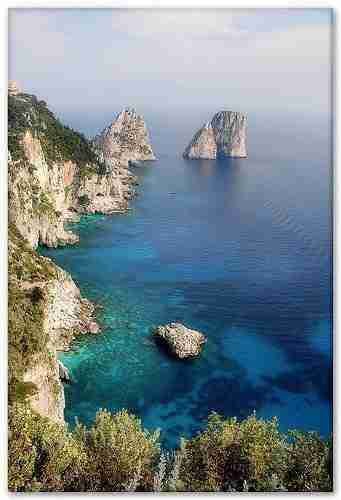
The Faraglioni Rocks off the Island of Capri ItalyI have to admit that I got the idea for this post from looking at my friend Laura’s photo on her Ciao Amalfi blog. Take a look at her blog and her profile pic and you’ll see exactly why I picked this location as one of Italy’s most beautiful places for a photo op. The Faraglioni Rocks are a group of three mini rock islands that have been known since Roman times. I Faraglioni, which are named Stella, Faraglione di Mezzo, and Faraglione di Fuori (Scopolo), are some of the most photographed features in southern Italy and you can even get up-close photographs of the rocks on a boat tour around the Bay of Naples. Faraglione di Mezzo even has a natural arch in it, which is a thrill to go through.

From San Miniato al Monte, Florence
Panorama of Florence Duomo from San Miniato al MonteThe typical place that tourists go to take photos of Florence – with the giant Duomo dome in the background – is Piazzale Michelangelo, a hill high above the city that is accessible by motor coach and has a huge parking lot buzzing with postcard vendors and “professional” photographers. Don’t get me wrong – this is a lovely place for a photo op. But even better is in front of the church of San Miniato al Monte, which is only about a five minute walk from Piazzale Michelangelo. San Miniato itself is a beautiful, medieval, green-and-white-marble church with spectacular interior mosaics where you’ll sometimes hear Gregorian chanting. If you enjoy getting out an about rather than hopping on board a motorized tour, you can hike a small path from the Lungarno along the city walls up to San Miniato. It can be a bit of a challenge, but the views are so much more rewarding once you make it to the top.

Atop the Duomo, Milan
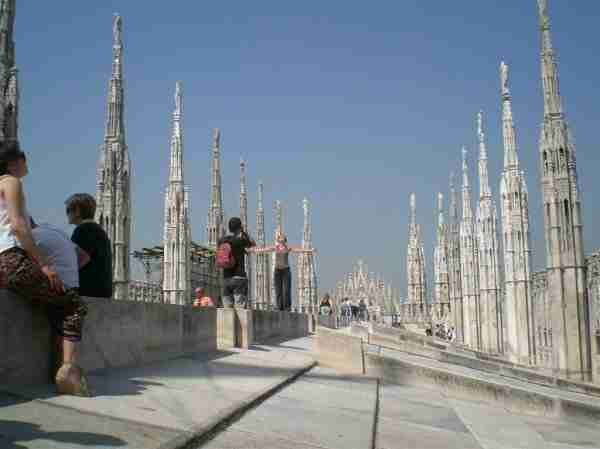
On the roof of the Duomo of Milan ItalyYou can scale the heights of the Duomo in Florence, the dome of St. Peter’s in Rome, and go up into the domes and attics of countless churches and bell towers in Italy. But none of these locations give you the kind of fabulous backdrop that you get from the top of the Duomo in Milan. The gorgeous Gothic church in the heart of Milan is a great photographic subject in itself and you can certainly capture some lovely pics of the whole cathedral while standing in the vast Piazza del Duomo. But take a trip to the Duomo’s roof and it’s as if you’re walking atop an intricately decorated wedding cake. A trip to the top also affords you nearer views of the church’s spires, statues, and gargoyles as well as a panorama of the Alps. Book your tickets to the Duomo rooftop.

Rome – the Bocca della Verità and Tomb of Cecilia Metella
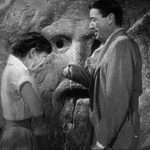
Hepburn and Peck at the Bocca della Verita in Roman HolidayWhen you’re in Rome, there is pressure to get that perfect shot with either the Colosseum or St. Peter’s Basilica in the background. Indeed, you should get those shots – for the Colosseum go up to Colle Oppio Park for a good angle and for St. Peter’s, the perch of the Pincio Park above Piazza del Popolo can’t be beat. But I like to suggest two classic places for a Roman photo op.

The first is the Bocca della Verità (the Mouth of Truth), an ancient manhole cover that is located in the entryway of the church of Santa Maria in Cosmedin around the corner from the Campidoglio. You may remember this landmark if you’ve seen the film Roman Holiday which starred Gregory Peck and Audrey Hepburn. The legend is that if you place your hand inside the mouth of the god/monster depicted on the cover that your hand will be chopped off if you haven’t been telling the truth. A photo in front of the Mouth of Truth is a fun diversion. And if it’s good enough for Audrey Hepburn, then it’s good enough for you.

Goethe nella Campagna RomeAnother great locale to have your photo snapped is among the ruins along the Appia Antica. In the days of the Grand Tour it was de rigueur to have your portrait painted among the remnants of antiquity. One of the most evocative portraits of this kind is of the German poet Johann Wolfgang von Goethe, who lived in Rome in the late 18C. The artist Johann Tischbein painted Goethe in the Countryside with the distinctive tomb of Cecilia Metella in the background. This is still a major monument in the Appia Antica park, and you can still enjoy a nice hike to the tomb on the weekend when the thru-ways are closed to traffic. While you won’t get the completely uncluttered panorama that Goethe enjoyed when he sat for his portrait, you will have a unique shot for the mantle. Kudos if you can also strike the same leggy pose!

Portofino Bay
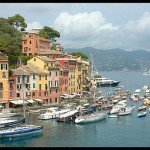
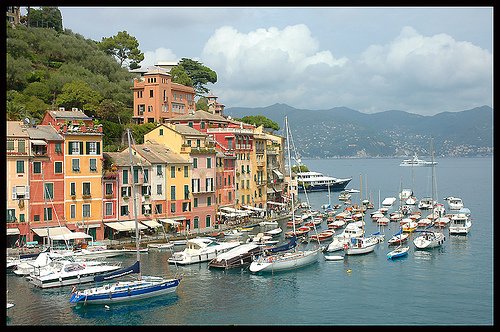
Portofino Bay in Liguria ItalyThe pastel houses of Portofino, a fishing village turned wealthy tourist haven in the region of Liguria so lovely that developers in Orlando, Florida, had to replicate it, make for a romantic backdrop for an Italy travel memory. Ideally, you want to get a photo of yourself in front of Portofino’s colorful port while on board a yacht. But if you can’t make that happen, there are a couple of options. One overlook is from the grounds of Castello Brown, a fortress located high above the bay. This ancient castle (some hypothesize that its foundations have been there since Roman times), however, is typically rented out for private events like weddings and conferences. It’s also a little high up for my liking. Another even better place to go to get a shot of the picturesque bay is to the church of San Giorgio, located on the Salita San Giorgio. Of course, there are also plenty of hotels located along this street where you can pay to see that bay view from your window every morning.

So these are just a handful of some of my favorite Italy photo locations. Where else would you suggest? Please comment below or find me on Twitter @italofileblog.

Photos © giorgiopix, rvega, Italian Notebook, Roman Holiday trailer, onlinekunst.de, buteijn


Tags: Capri, Florence, Milan, photography, Portofino, Rome, video


"


Reblog this post [with Zemanta]

Tuesday, March 30, 2010

Art in Italy

Last supperImage via Wikipedia

Italy is internationally recognized for its vast culture, art development and language production. Travel to Europe
and study Italian in Italy is a great option to discover the country where the two thirds of the world’s historical heritage lies. All types of architectural styles of the west globe can be found in Italy. Discover amazing cities as the region of the Tuscany that counts with more artistic expressions than the whole of Spain. The UNESCO has declared as World Heritage Sites more than 40 regions of Italy. Discover this astonishing past while you study Italian in Italy.

The Historic Center of Florence is a huge conglomerate of constructions and expressions from the Renaissance times and the Etruscan settlements in Italy. As you study Italian in Italy enjoy in Florence impressive buildings as the Church of Santa Croce and the Uffizi and Pitti Palace. Don’t miss the incredible works of Michelangelo, Botticelli and Giotto.

You should visit Rome and discover the capital of the ancient Roman Empire and the Roman Republic. In Rome you will enjoy religious constructions as the papal buildings and monuments
to old rulers like the Column of Marcus Aurelius. Study Italian in Italy as you go around the extensive mausoleums of Augusts and Hadrian, the Pantheon and Trajan’s Column.

In Lombardy you must get immersed in the mystery of the Dominican Convent of Santa Maria delle Grazie. Study Italian in Italy and find in this chapel a marvellous architectural complexity and the masterpiece “The Last Supper” by Leonardo Da Vinci.

The city of Venice is an artistic expression in itself. While you study Italian in Italy you will encounter the major maritime power Italy ever had. Venice constructions and its intelligent display framed by water, are the most beautiful postcard Italy will confer you. Also enjoy the works of master Titian and Veronese.

A special place to visit in the region of Padua as you study Italian in Italy is the Botanical Garden created in 1945. This is the first botanical garden created in the world and it still keeps its premier layout. It also maintains its original purpose of being a scientific research center.

If you are interested in the archaeological past of the country, you must visit the province of Udine while you study Italian in Italy. In Udine you will find the greatest archaeological reserve of the kind; go around the remains of the wealthy city of Aquileia that was destroyed by Attila in the 5th C. Here you will also find the famous Patriarchal Basilica in your journey through history while you study Italian in Italy.

Italy is full of Catholic and Christian religious heritage. If you want to enjoy the biggest expression of faith in the country you should visit the Sacri Monti as you study Italian in Italy. This place portrays a group of chapels of architectural design from the 16th C, with valued paintings and statues. The chapels are perfectly integrated to the natural hilly landscape with blue lakes and pine trees. Study Italian in Italy and enjoy a country rich in culture, arts and faith.

Search Amazon.com for Vino Con Vista
Reblog this post [with Zemanta]