Vino Con Vista Italy Travel Guides and Events

Vino Con Vista | Traveler

Monday, June 14, 2010

How to Get from Italy to Sicily (and Vice Versa)

How to Get from Italy to Sicily (and Vice Versa): "

italytosicily1Let me start off here by saying the title of this article is more than a little confusing. If you’re saying, “How to get from Italy to Sicily? Isn’t Sicily part of Italy?” the answer is yes – and no. As you’ll remember from your brief introduction to Italian history, Italy didn’t become a unified country until 1861. Prior to that, Sicily was one of many independent city-states, and there’s still quite a bit of the “I’m Sicilian first, Italian second” mentality – as there is with other parts of Italy, too.


But practically speaking, the title of this article really refers to the notion that getting to the island of Sicily requires a jump from the Italian mainland. There’s long been talk about building a bridge across the Straits of Messina that would more easily connect Sicily with Italy’s mainland, but between political promises made during campaigns (which are conveniently forgotten post-elections) and the fact that there are some people on both sides of the strait who would just as soon not have the two land masses more easily connected, I’m not sure such a bridge will ever be built. Until then, therefore, your options for getting from Italy to Sicily – or vice versa – are listed below.


Please Note:

Because this is an overall article about coming from Italy – anywhere in Italy – I’ve had to generalize more than I usually do on these articles. You could, after all, be just about anyhwere on the mainland. I’ve done my best to outline your options for getting from the mainland of Italy to Sicily in this article, and if I’ve missed something or left something out please let me know… But if it’s just information about your specific route you’re looking for, I’m hoping I’ve given you the tools in this article so that you’ll be able to find the information you need on your own.


Flying from Italy to Sicily
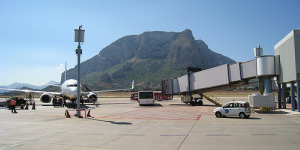

italytosicily2Depending on where you’re starting from in Italy, your best bet in terms of both time and money might be to fly to Sicily. There are a few airports on the island, although there are three in particular you’ll want to look at for flights from both the Italian mainland and elsewhere in Europe. The airports to check are in Catania, Palermo, and Trapani – and your airline options will vary for each arrival airport (not to mention the airport you’re closest to on the mainland).


Some examples of flights I found as I was writing this are:


  • Rome Fiumicino to Catania – Flights on Air One, blu-express, Wind Jet, Meridiana; prices from €47 one-way/€86 round-trip; flight time roughly 1.5 hours

  • Milan Linate to Catania – Flights on Air One, Meridiana, Wind Jet; prices from €72 one-way/€147 round-trip; flight time roughly 2 hours

  • Rome Fiumicino to Palermo – Flights on Air One, easyJet, blu-express, Meridiana; prices from €21 one-way/€43 round-trip; flight time roughly 1 hour

  • Milan Linate or Malpensa to Palermo – Flights on Air One, Meridiana, Wind Jet; prices from €63 one-way/€104 round-trip; flight time roughly 1.5-2 hours

  • Rome Ciampino or Fiumicino to Trapani – Flights on Ryanair, Air One; prices from €28 one-way/€70 round-trip; flight time roughly 1 hour

  • Milan Bergamo Orio al Serio to Trapani – Flights on Ryanair, Air One, Meridiana; prices from €37 one-way/€57 round-trip; flight time roughly 1.5 hours


>> Read more about budget airlines that fly to Sicily, especially if you’re outside Italy to begin with.


Taking a Ferry from Italy to Sicily
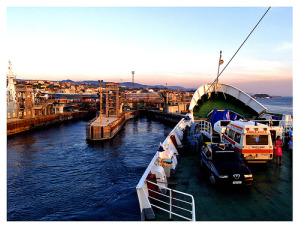

italytosicily3As you read above, there is not currently a bridge that stretches over the water from the mainland of Italy to the island of Sicily. What that means is that any form of transportation listed here other than flying will involve going on a ferry boat at some point. Luckily, the ferries that connect Italy and Sicily are the kind that take entire trains (not to mention cars and buses) on board, making your trip easier to deal with.


There are several different ports on the Italian mainland from which you can sail to Sicily, and obviously you’ll pick the departure point that’s closest to you. But keep in mind that not all of the ferry departures can accommodate cars or trains, so if you have a particular mode of transport in mind then you’ll want to make sure that will be available at the departure city you’re targeting. Another thing to factor in is how many sailings per week there are from various points. Some have 3-7 per week, some have more, some only have 1. All of this is to say that your ferry crossing is something you’ll want to research in advance so you don’t end up spending an extra week somewhere you don’t want to be.


Some of the departure ports on the Italian mainland with long-haul ferry service to Sicily are Naples, Civitavecchia, Genoa, Salerno, and Livorno. There are quite a few ferry companies that connect Italy’s mainland with Sicily, but a few names to look for include SNAV, TTT Lines, Tirrenia, Grandi Navi Veloci, and Grimaldi Lines. Because the potential departure cities are some distance from one another, the ferry travel time varies significantly. The longer crossings are in the 19-28 hour range (from Genoa or Livorno to Palermo or Catania), and there are several in the 8-14 hour range.


As with everything else on this list, prices for the ferries will vary depending on where you start out, where you’re going, and what mode of transport you’re using (i.e., driving a car onto a ferry, taking the train onto a ferry, being a walk-on traveler, etc.). Here are a few prices to see as samples, but there are too many to list here – be sure to check with the port where you are for the most updated ticket price information. (And consult the information above about taking the train, since your train ticket covers your ferry crossing, too.)


  • Naples-Palermo – SNAV ferry, 1 foot passenger, 1 bed in shared “economy cabin” – €52 one-way/€95 round-trip

  • Naples-Palermo – Tirrenia ferry, 1 passenger, drive-on with a small car, 1 first class seat on ferry – €142 one-way/€197 round-trip

  • Civitavecchia-Catania – Grimaldi Lines ferry, 2 passengers, drive-on with small car, 2-bed cabin suite – €318 one-way/€636

  • Genoa-Palermo – Grandi Navi Veloci ferry, 1 foot passenger, 1 bed in shared “economy cabin” – €107 one-way/€214

  • Livorno-Palermo – Grandi Navi Veloci ferry, 2 passengers, drive-on with small car, 4-berth inside cabin – €279 one-way/€442


If your last stop on the Italian mainland is in Calabria, the region in the toe of the boot that’s closest to Sicily, the ferry situation is different. Ferries run more frequently, are cheaper, and don’t typically require reservations the way the ferries listed above do. You can drive a car on or walk on, assuming there’s space, and the trip from Villa San Giovanni or Reggio di Calabria on the mainland to Messina on Sicily takes about a half-hour. Two ferry companies to look for are Meridiano Lines and Caronte & Tourist, and some prices are:


  • Foot passenger – €1.50 one-way/€2 round-trip

  • Car with only the driver – €29 one-way/€20 round-trip within 4 days

  • Car with driver + 3 passengers – €32 one-way/€31.50 round-trip within 4 days


Taking the Train from Italy to Sicily
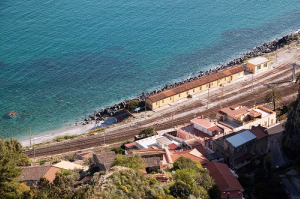

italytosicily4Although there are very good reasons for renting a car in southern Italy, you can definitely get around much of the region by sticking the train routes – and that includes getting across the water to Sicily. Taking the train between Italy and Sicily is a fairly unique experience, too, as the trains roll right onto ferries and then back onto train tracks on the other side of the crossing. You never even have to leave your train seat if you don’t want to.


Trains cross the Straits of Messina between Villa San Giovanni on the mainland and the city of Messina on Sicily. As mentioned, you can stay where you are on the train if you like – but it’s widely recommended that you make the trip up onto the deck of the ferry to catch the beautiful views. The crossing is often done as night is falling, so you may get treated to a spectacular sunset. Just be sure to note the number of your train car and pay attention to where you came from, as getting back to your train can be a little challenging.


The prices on train tickets from Italy to Sicily will vary depending on where you’re coming from and the speed of the train you want to take, but here are some sample prices:


  • Rome to Palermo – €84-126 first class, €46-94 second class

  • Naples to Catania – €58-72 first class, €42-59 second class

  • Milan to Palermo – €144-200 first class, €126-148 second class


As you can see, while I’m usually someone who’ll advocate for taking the train above all other forms of transport in Italy, the passage from Italy’s mainland to Sicily isn’t necessarily one of those times. Sometimes there are great deals on tickets running, and it can’t hurt to check, but if you’re not already in Calabria (making your train trip much shorter and cheaper) you may find that taking the train isn’t the best option for you.


Driving from Italy to Sicily
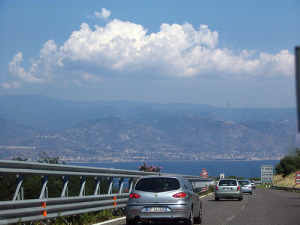

italytosicily5Since you could be coming from anywhere on the Italian mainland, and since you’ll be headed for one of the various cities listed above under the ferry information so you can drive your car onto a ferry bound for Sicily, I’m not going to re-hash all of the ferry information here.


I suggest that you use a good GPS system or look up a route on Via Michelin (and have a good driving map with you). That way you can plug in exactly the address you’re departing from and get the most accurate driving directions to the city where you’ll sail to Sicily. And don’t forget to read all about what you should know about driving in Italy before you get there.


Taking the Bus from Italy to Sicily
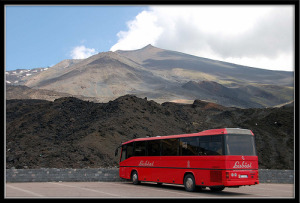

italytosicily6There are some long-distance buses in Italy that you can take from various points on the mainland to a couple of the major cities on the island of Sicily. SAIS Trasporti buses are the ones that will get you from your last stop on the Italian mainland to Sicily, but you’ve got to get to one of their departure points first. If you’re on the SAIS website (in Italian) you can technically book a trip all the way from Milan to Catania, but what you’re booking in that case is a train trip to Rome and then a bus trip from Rome to Sicily. So here is the information for the SAIS bus trips leaving from Rome and Naples heading for Palermo and Catania.


  • Rome-Palermo – €44 one-way (€39.50 for those under 26 or over 60), overnight bus ride with a bus change in Messina, departs Roma Tiburtina at 21:00 and arrives in Palermo at 09:00

  • Rome-Catania – €45 one-way (€41 for those under 26 or over 60), overnight bus ride, departs Roma Tiburtina at 21:00 and arrives in Catania at 08:00

  • Naples-Palermo – €35 one-way (€32 for those under 26 or over 60), overnight bus ride with a bus change in Messina, departs Naples at 21:30 and arrives in Palermo at 09:15

  • Naples-Catania – €33 one-way (€30 for those under 26 or over 60), overnight bus ride, departs Naples at 21:30 and arrives in Catania at 06:30


The prices on these bus trips, as you can see, are definitely budget-friendly for anyone who’s on a real shoestring traveling through Italy. I’m not sure the transport times are to my liking (especially without a cushy berth on a train or a ferry), but if you’re one of those lucky people who can sleep anywhere and not wake up stiff and sore then I envy you you might not mind at all.


photos, top to bottom, by: Allie_Caulfield, Dan Bock, Hermes, japrea, Salvatore.Freni, Daveness_98


"

Friday, June 11, 2010

Finding a niche in Piemonte, Italy

Isola Bella, Stresa, Piemonte, Italy

Image via Wikipedia


_ Piemonte is a gem mixing nature, tradition and food _
By Chung Ah-young
Korea Times correspondent

Piemonte, ITALY _ Italy looks like a mosaic of diverse colorful regions assembled into a perfect composition. Each has its own color and distinct taste reflecting its natural background and tradition.
Piemonte is a very unique part of the assemblage that shows another Italian way of life.
Blessed with the wealth of natural resources, breathtaking landscapes and a rich historical background, Piemonte means “at the foot of the mountains,” that cover the northwestern part of Italy

Go to the Source 

Enhanced by Zemanta

Thursday, June 10, 2010

I Love Touring Rome, Italy - Spanish Steps District Hotels

Scalinata trinità dei monti, Roma, ItaliaImage via Wikipedia


The Spanish Steps area is close to the center of Rome. This is a fine place to meet old and new friends and enjoy shopping or hit the cafes. Take lots of photos. Please note that the Spanish Steps themselves were built with French funds early in the Eighteenth Century. But the Spanish Embassy is nearby. The natives call these famous steps La Scalinata (the staircase). Other neighborhood sights to see include the Fifteenth Century Trinita dei Monti Church at the top of the steps and the Keats-Shelly Memorial House where the English poet Keats died. Don't miss the Palazzetto Zuccari that resembles a monster's face. Via dei Condotti is a famous upscale shopping street. Despite a lawsuit, there's a MacDonald's in the neighborhood. Make sure to visit Via del Babuino, the street of antiques, and Via Margutta, the street of artists. For your convenience we have listed neighborhood hotels in approximate order of cost, starting with the least expensive. We have personally verified all website addresses making sure that they include English-language pages.


The Panda Hotel is right on on a major shopping street near the Spanish Steps. The money that you might save by staying here can easily be spent in this upscale neighborhood. Unlike many other hotels, the Panda defines only two seasons price-wise. Most of the year is high season. There are 20 rooms, 14 of which have a private bath. The rooms have no television. Did you come to the heart of Rome to watch TV? The hotel address is Via della Croce 35 - 00187, Rome.


The B&B Rhona's Rooms is a four room bed and breakfast in a typical old building serviced by elevator. All rooms are equipped with a luxury private bathroom boasting a 13-jet hydro-massage shower, Turkish steam bath, alternating hot/cold (Scottish) shower, aromatherapy and radio. There is a panoramic terrace. Try to rent the room that overlooks the Via dei Condotti and has views of the Spanish Steps. The address is Via dei Condotti, 23 - 00187 - Rome. Rome, Italy.


The Hotel San Carlo is located in a renovated Seventeenth Century mansion. There is a rooftop terrace and the rooms have flat-screen TVs and sometimes their own terrace. If you ask me to choose between the best TV and a tiny view of Rome... The hotel has 50 rooms ranging from singles to quads and 2 suites. The address is Via delle Carrozze 92-93 - 00187, Rome.


The Hotel Hassler is really hot stuff. It has often been named as Rome's top hotel. The rooms are a living definition of luxury, especially if you go for the Grand Deluxe ones. Even the single occupancy rooms directed toward business travelers have marble bathrooms. There are 5 on-site bars and restaurants. The list goes on; I think you get the general idea. Expect to pay big bucks. Expect to see big shots. The address is Piazza Trinita dei Monti 6, Spagna.


Levi Reiss wrote or co-authored ten computer and Internet books, but would rather drink fine French, German, or other wine, accompanied by the right foods. He teaches classes in computers at an Ontario French-language community college. Visit his new wine, diet, health, and nutrition website www.wineinyourdiet.com and his Italian travel website www.travelitalytravel.com.


Source: http://www.submityourarticle.com


Permalink: http://www.submityourarticle.com/a.php?a=103742


Reblog this post [with Zemanta]

The Best Way To Compare Currency Exchange Rates


Anyone going on a foreign holiday in the near future might be interested to discover how best to compare currency exchange rates. It is a very important consideration as choosing the wrong option can prove very costly indeed given the difference in fees. By looking at some choices we can help you decide what is best for you.

As obvious as it may seem, purchasing cash to take abroad with you is a very common way of exchanging currency. However, although it is accepted by all, it is the least secure option available. If you are unlucky enough to be mugged and have your cash stolen, there really is nothing that can be done to replace the lost amount and so carrying cash should be avoided wherever possible.


While some people may expect to find them in museums these days, travellers cheques are actually still in fairly common usage due to their low cost and their security. Lost cheques can quickly be replaced by the issuing institution, but this does not compensate for the fact that it is increasingly difficult to find a retailer prepared to accept them. If your idea of a good time is queuing up at a bank to exchange cheques then this might be the option for you, but for most normal people they are best left well alone!

Credit cards are now one of the most common ways to exchange currency when abroad. The most popular cards are accepted in most shops, and as the majority of people already have a credit card it is probably the laziest option too. They also are very secure and if lost or used fraudulently your bank will be able to replace or refund you without any real trouble. Major concerns about using credit cards involve cost and budgeting. The fees charged for overseas use are typically expensive, while having access to credit encourages you to overspend. Even for the most disciplined this is a real temptation while on holiday, and it would be a pity to ruin a great time by getting into financial difficulty.

Debit cards are similar in nature, and in fact provide a list of benefits almost identical to the credit card. There are a few more negatives though as cash withdrawals are subject to additional charges and the cards are not just as widely accepted as credit cards are.

With all these options available, you will be pleased to hear that the prepaid currency card is the best of all for most holidaymakers. You can load it with however much you want to spend before leaving, so that overspending is not a concern. The card also offers the same security and convenience of the credit and debit card but with lower fees, so you effectively are able to gain from having the best of both worlds.

By way of conclusion, of the numerous choices there are when you compare currency exchange rates, the only option offering security, convenience and affordability is the prepaid currency card. Although you may also use another method for emergencies, with the currency card in your pocket you can relax and enjoy your break safe in the knowledge that your spending will be as efficient as possible.


Tom writes on finding the best exchange rate for euros, amongst other things in travel. He lives London, UK.


Source: http://www.submityourarticle.com


Permalink: http://www.submityourarticle.com/a.php?a=101443


Reblog this post [with Zemanta]

Wednesday, June 9, 2010

Venice, Italy - Ca D'Oro

Santa Maria Gloriosa dei Frari in VeneziaImage via Wikipedia

By Harry Preston

Goldleaf, ultramarine and vermillion were the most expensive pigments at the time, and the man who commissioned the palace, Procuratore Marino Contarini, was showing off his wealth. The Contarinis were one of Venice's most successful patrician families. Between 1043 and 1676 they provided eight doges for the Republic. Marino didn't manage to get himself elected so he set out to impress the city with his vast wealth. In 1421 the site had been prepared by demolishing the Palazzo Zeno, which was part of the dowry brought by Marino's wife. Between 1425 and 1434 Ca d'Oro was constructed in its place. The style is pure Gothic Venetian, described by some as "floral".

Other buildings in this style are Palazzo Barbaro and the Palazzo Giustinian, both nearby. In this case the architect was Bartolomeo Bon from Campione d'ltalla. Bon, working in partnership with his father, completed a number of important works in Venice including the Porta della Carta in Basilica di San Marco, with its monumental sculpture of the judgement of Solomon, the great marble door of Santa Maria dei Frari and the fine Foscari Arch of thePalazzo Ducale.

The wonderful airiness of the palace arises from its oriental pinnacles and the recessed colonnaded loggia which leads from the canal into a much more substantial entrance hall in front of a small inner courtyard into which Bon inserted an impressive well head (vera di pozzo). one of his signature features. The palazzo has been described, rightly, as a cross between a medieval church and a Moorish temple and yet for all its delicacy it is, and always was intended to be, asymmetrical. The palazzo changed hands many times over the following centuries and was owned by both the Marcello and Loredan families, but it remained in the hands of the aristocracy until the fall of the Venetian Republic in 1797.

In the 19th century it was extensively altered by a series of new owners, including Prince Troubetzkoy who bought it for the dancer Maria Taglioni. Under her direction the Gothic stairway and the balconies overlooking the inner courtyard were removed and the well head sold off. John Ruskin, in The Stones of Venice, declared her interventions to be an act for which he could not forgive her.

In 1894 Baron Franchetti acquired the building. He rebuilt the stairway and balconies and restored Bartolomeo Bon's well head. He also compiled a rich art collection which he bequeathed to the state, along with this palazzo, after his death in 1922. Today, the Galleria Giorgio Franchetti is open to the public. It contains some rather routine Tintorettos and Titians but Mantegna's St Sebastian on the first floor is unmissable. Look out for Bartolo's Coronation of the Virgin, Lombardo's Young Couple and Antonio da Firenze's Story of Lucrezia.

For more information about Venice, Italy visit GuidedTourVenice.com.

For more information about Dubai, UAE visit GuidedTourDubai.com

Article Source: http://EzineArticles.com/?expert=Harry_Preston


Reblog this post [with Zemanta]

Tuesday, June 8, 2010

The Top 5 Attractions in Lazio


Discover the Roman Delights of Sicily

One of the earliest visual documentations of a...Image via Wikipedia

By Mark Scriven


Sicily's key location in the middle of the Mediterranean Basin has meant that, in the past, it has hosted settlers, and conquerors, from everywhere, including the medieval Normans, Aragonese Spanish, Moorish North Africans, ancient Greeks, Phoenicians, and Romans. They have all arrived at some time and, with the exception of the Romans, for the most part, departed.

Many people believe that Sicily's Roman ruins are the equal to those in Rome. Whether this is true or not, anyone who loves Roman archaeology should definitely spend some time exploring Sicily's amazing treasure trove of ruins.

To understand the diversity of Sicily in ancient times and specifically the range of artefacts dating from the Greek and Roman occupation of the island, spend some time at the Museo Archeologico Regionale, which is located in Palermo. Among Italy's most noteworthy archaeological museums, it is a treasure-trove of unique finds that help you understand the many occupations by foreigners. Also, you'll have an opportunity to compare invaluable artefacts from the island's various civilizations, including those from the era of the Phoenicians, Punics, Greeks, Romans and Saracens.

Following is a list of what we believe to be the best Roman ruins found in Sicily:

Cape Boéo - Marsala Roman ruins still have a villa with its baths and colourful mosaic tiles; also, you can see the Church of San Giovanni, which was constructed on top of a cave that served as a residence in Roman times. One of the exhibits at the Baglio Anselmi Archeological Museum, which is located on Lungomare Boéo, is a ship dating from the Punic era.

Catania - Catania is home to two Roman amphitheatres, one of which will remind you of the Colosseum in Rome. The smaller one, located off Via Vittorio Emanuele, was constructed on top of an earlier Greek theatre, which sat 6,000 spectators, while a larger amphitheatre, found close to the commercial centre in Piazza Stesicoro, is totally Roman and was constructed in the second century AD.

Solunto - Palermo - Less than twenty kilometers east of Palermo, looming over the coast, and on a site that had its origins as a Phoenician village that the Greeks enlarged in 396 BC, sits the remains of a town that was reconstructed by the Romans who conquered it 50 years later. For the most part, the ruins consist of floors, with some mosaics, and the bottom parts of walls, although there are a few murals and columns to be seen. While you will find a small archaeological museum located here, the majority of the original artefacts are found in Palermo at the Regional Archaeological Museum.

Taormina - The Greek amphitheatre found here dates back to the third century BC; it's stage was later expanded by the Romans. The scenery surrounding Mount Etna, not to mention the sea beyond the theatre, is awesome. In the summertime, the theatre hosts dramatic plays and performances. A smaller Roman theatre, the odium, is located close to the Santa Caterina church.

Tyndaris - Capo Tindari - Tyndaris was founded by Dionysius the Elder in 396 BC. Later pillaging conquerors laid waste to it, but it has been dug up to show the ruins of everything that stood there, including a basilica and a Roman theatre. The setting, overlooking the sea, is amazing.

Villa Romana del Casale - Piazza Armerina - This Roman villa, which is located a few kilometers beyond town limits, was built somewhere between 330 and 360 AD. It is thought to be one of the biggest classical-era Roman dwellings in the world that is still standing. The 40-room villa houses western Europe's most noteworthy mosaics showing scenes of day-to-day life, like hunting; there is also a mosaic depicting ten young women wearing strapless two-piece bathing suits that would be fashionable in modern times.

If you love archaeology, then when you are in Sicily, you must go see the Valley of the Temples, the biggest and most noteworthy collection of ancient Greek ruins found anywhere. You'll also find necropoli, residences, avenues and all the other artefacts you would expect to see in an ancient metropolis. You will definitely want to see the small amphitheatre, the several auditoria, and the world-class archaeological museum. Don't leave out the Concord Temple; it has 13 tall columns that show the effects of the wind. Located outside the city of Agrigento, situated on the southern coast of Sicily, the temples appear dramatic in the evening when floodlights outline their shape and size.

Mark Scriven is an online marketing expert and has written many articles on business, travel and the internet. For a wide selection of holiday villas in Sicily visit Cottages to Castles, specialists in luxury vacation accommodation in Italy.

Article Source: http://EzineArticles.com/?expert=Mark_Scriven


Reblog this post [with Zemanta]

Monday, June 7, 2010

A Luxury Weekend in Rome

A 5x6 segment panoramic image taken by myself ...Image via Wikipedia

By Tom Ingrams


Home of more monuments, culture and chic fashion than any other city in Europe, Rome is one of those fabulous destinations that you have to visit in style. From the awe-inspiring architecture of the churches to the luxury hotels in Rome, it's a place which showcases opulence.

Where to Stay

There are plenty of luxury hotels in Rome to choose from, but the location can make all the difference to the atmosphere. If you're looking for somewhere very central to make the most of the sights on a short visit, Residenza Napoleon III is hard to top for its whimsy and aristocratic vibe. Housed in a 16th Century palazzo on the legendary Via Condotti, it's a unique antique property which has been restored to its former grandeur and glory.

Hotel Lord Byron is situated outside the heart of the city near Villa Borghese, which is just far enough away from the crowds to offer peace and quiet inside its elegant walls. Private and old-fashioned, this townhouse has an Art Deco edge expressed in such lovely touches as oversized marble bath tubs.

Where to Visit

It would be hard to see everything in Rome even if you spent a year here, so it's important to pick and choose what really interests you. The best way to really experience the city, though, is just to walk through the streets and marvel at every new treasure and secluded fountain which is revealed. Starting at Vatican City, you can walk along the Tiber River and then into the heart of Old Rome to the Pantheon with ease.

When you find a view that takes your fancy, pause for a moment to enjoy the dolce vita lifestyle for which Italy is famed and indulge in a cappuccino, or an aperitivo after sunset. Most of the piazzas will have outside tables to soak up the atmosphere of tourists staring at the monuments and locals hurrying about their business without seeming to notice they're in the presence of some of the world's most famous art.

Eating and Drinking

Italy is famed for its cuisine and the capital is no exception, although a lot of eating establishments right outside the attractions will be overpriced for the quality they provide. Off the immediate tourist track, side streets are filled with family style restaurants for a hearty meal and wine bars where you can enjoy plenty of delicious side dishes like cheese, antipasti and olives to accompany your drink.

Tom Ingrams is a travel writer who specializes in the higher end of the market, with particular attention to the very best luxury hotels in Rome.

Article Source: http://EzineArticles.com/?expert=Tom_Ingrams


Reblog this post [with Zemanta]

Sunday, June 6, 2010

Discover the 'Other' Italian Lakes

Lago Maggiore as seen from Verbania, Italy. La...Image via Wikipedia

By Mark Scriven

When you think of the Italian Lakes most people tend to think of Lake Maggiore, Lake Lugano, Lake Como, and Lake Garda - the famous glacial lakes located in the northern Lombardy region in the foothills of the Alps and close to Italy's border with Switzerland. These stunning lakes attract millions of tourists each year and can be exceptionally crowded during weekends and in the summer months.

However, there are another group of lakes in Italy which are just as beautiful but much less well-known. The 'other' Italian lakes are volcanic in nature and located just north of Rome, in the Lazio area. Lake Bracciano, Lake Bolsena and Lake Vico are very easy to get to and are all breathtakingly beautiful. You will find them between the Apennine Mountains on the east, and the Mediterranean Sea to the west sitting at an altitude of almost three hundred meters.

Perhaps one of the best ways to experience these lakes is to rent one of the many historical holiday houses that are available in the area. These properties tend to be located in very rural areas, or in small villages, and provide a real feel for the local area.

There are many holiday rental options to choose from in the Lazio region that will fit any budget. However, due to the proximity of Rome it is important to make reservations well in advance - especially in high season.

You will find a number of stunning rental properties in this area. For example, the lovely Villa Concetta is only two kilometers away from Lake Vico. This is the oldest volcanic lake in Europe. It is also very near to lake front beaches and lots of nice restaurants and bars. The villa is surrounded by spacious landscaped grounds and is equipped with a private swimming pool.

You can barbecue and eat outside on the patio. If you don't want to cook, there are great restaurants nearby. The village of Caprarola is nearby with its pharmacy, shops and banks. There are wonderful walking trails in the nearby woods and the Cimini mountains.

Villa Castelluzzo is another beautiful and historic holiday villa which is secluded amongst lovely lawns, wooded gardens, and mature trees on the Lazio/Umbria border near Assisi. This property is extremely well appointed and features a floodlit tennis court, a large outdoor pool, a heated indoor pool, sauna and jacuzzi.

The lovely village of Lubriano is only a few kilometers away and you can easily drive to Lake Bolsena just 16-kilometers away. The towns of Maremma and Montepulciano make great day trips.

Villa Anna is a large vacation property suitable for a group on holiday or for a large family. It's situated only an hour from Rome on the shore of beautiful Lake Vico. The house features open fireplaces, large picture windows and traditional furnishings. It offers a total of five bedrooms - three on the ground floor and two on the second floor. There is plenty of outside dining space and the house overlooks wooded gardens and lawns with wonderful panoramas of the lake and the beach. The lake with its numerous restaurants and bars is a short walk from the villa.

The historic village of Ronciglione is just four kilometers away on the Via Francigena offering a wide selection of restaurants as well as other amenities.

Whether you decide to stay in one of these stunning holiday homes or choose a different accommodation option, the 'other' Italian lakes of Lake Bracciano, Lake Bolsena and Lake Vico are definitely worth a visit. Not only are they as beautiful as their more celebrated rivals in the North of Italy, but they also offer a much less crowded and natural alternative.

Mark Scriven is an online marketing expert and has written many articles on business, travel and the internet. For a wide selection of holiday villas in Italy visit Cottages to Castles, specialists in luxury vacation rentals in Italy.

Article Source: http://EzineArticles.com/?expert=Mark_Scriven


Reblog this post [with Zemanta]

Saturday, June 5, 2010

Bologna, Italy

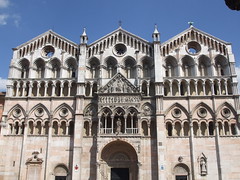
duomo di FerraraImage by Kliò via Flickr


Visitors to Italy will find the city of Bologna to be a pleasant place to pass their vacation time in. You will find this city is the capital city of the Emilia-Romagna region which lies in the Po Valley. The city which is situated in Northern Italy can be found lying between the Reno River and that of the Savena River. Exploring the city of Bologna will reveal to you are city which has a rich culture, history and all of the amenities which makes visiting this city a pleasure to the senses.

As you arrive in Bologna you will see a number of interesting places that you can visit. There will also be parks, fountains statues that you can look at. In order to see all of these sights you may want to become better acquainted with the city and its sights. To help you relax from your long trip you may want to relax in one of the city's many parks. Many of the parks you will find in Bologna today used to be private gardens which used belong to the nobles of the city.

Of these various gardens you may wish to the Giardini Margherita park or as it is called in English the Margherita Gardens. The gardens and the chalet that you will see here were created in 1875. The chalet is used today as a nightclub during the summer evenings. Visitors to this lovely park will find that it is opened from 6 in the morning until midnight. This is only one of the many parks that you can explore while you are in Bologna. From these numerous parks you may wish to see some of the religious buildings that you will find in the city.

One such place you may wish to visit during your sightseeing excursions is that of the Santuario della Madonna di San Luca or St. Luke's Basilica. This basilica was built during the mid-18th century. Within this basilica you will be able to see the icon of Bologna which is known as the Madonna di San Luca. The shape of this basilica is somewhat unusual as it is round instead of rectangular. You will be able to reach the Santuario della Madonna di San Luca by walking along the unique portico with its 666 arches. As you walk long these arches you will be able to see a stunning view of the city.

Your next stop here in Bologna should be that of the Fontana di Nettuno - the Fountain of Neptune as it is called in English - which was built in 1563. This fountain is considered to be one of Bologna's symbols. It was built by Tommaso Laureti of Palermo. The embellishments you will find on the fountain were added on later by Jean de Boulogne or as he was also called Giambologna.

These are just a few of the beauties that you will find when you come and visit Bologna in Italy. The rich culture and history you will find here go hand in hand with the warmth and hospitality of the people of this city. The next time you are thinking about visiting Italy make sure you book your holiday for some quality time spent in Bologna.

For a wide selection of Bologna hotels just click here.

Article Source: http://EzineArticles.com/?expert=Hannah_Rollma


Reblog this post [with Zemanta]

Friday, June 4, 2010

The Best Places to Stop When You Travel to Italy

Leaning Tower of PisaImage via Wikipedia

By Luciano Fellini00

The people who live there call it The Belapese, Beautiful Country, and while they may be biased, the Italians certainly know what they are talking about. Lovers of fashion, art and food alike will find something to swoon for when they get to Italy. There is so much to see that many people need to return more than once, but first time visitors should not miss these important Italian attractions.

When in Rome, it is difficult to miss The Trevi Fountain, the largest and most famous fountain in the entire city. Not only is it beautiful, but it is the center piece for one of Italy's most romantic customs. Legend says that if someone throws one coin over their shoulder into the fountain, they are sure to return to Rome someday. Two coins means they will fall in love with an Italian and three coins means they will marry them.

It is not necessary to be Catholic in order to appreciate a visit to The Vatican in Rome. The Vatican Museums are home to one of the world's largest and most impressive art collections. After touring the collection, visitors get to view Michelangelo's infamous painting on the ceiling of The Sistine Chapel.

While some of Italy's most iconic sights are in Rome, there is much to see in the other beautiful areas of the country. Florence is perhaps the loveliest city in all of Italy and is home to the renowned sculpture, David, by Michelangelo. Not only does it feature beautiful art, but it is home to many of the fashion world's top names, such as Gucci and Ferragamo.

The famed Leaning Tower is just one of the reasons that people flock to the city of Pisa. The city is home to many of Italy's finest universities, so it is always abuzz with students going to and from class. Visitors will often see them studying in the Piazza dei Miracoli, one of Italy's most gorgeous squares.

When people plan a getaway to Italy, they usually imagine themselves being serenaded by a gondolier while cruising the waterways of Venice. This is one of the most relaxing and romantic ways to explore the city, which is full of beautiful buildings and works of art. In fact, Venice has the distinction of housing more artistic masterpieces per square kilometer than any other city in the world.

There is no denying the powerful beauty of Italy and the attraction it holds for lovers of fashion, food, architecture and art. The Italian people love their country so dearly, they are thrilled to show visitors around, making the entire experience even more magical. When planning to travel in Italy, be sure not to miss these beautiful cities and infamous landmarks.

Luciano Fellini is a travel writer living in Rome. To learn more about travel in Italy stop by Discover Beautiful Places for more articles like this.

Article Source: http://EzineArticles.com/?expert=Luciano_Fellini


Reblog this post [with Zemanta]

Thursday, June 3, 2010

I Love Touring Rome, Italy - Hotels In The Parioli District

Roman depiction of the Tiber as a river-god (T...Image via Wikipedia


The Parioli-Auditorium district of northern Rome is partly bordered by the winding Tiber River. Parioli is an upper class neighborhood which owes its name to the pear orchards that have long since disappeared. Just so you know, this district was a favorite of Mussolini's bigwigs during his heyday. This is embassy country and so offers international schools. The district also hosts Rome's Islamic Cultural Center and a major Mosque, which should be viewed from the interior. The Rome Parco della Musica (Auditorium) was completed in 2002. This spectacular complex includes recording studios, restaurants, bars, shops, libraries, and museums. The Ponte Milvio is one of Rome's oldest bridges; first rebuilt in 109 B. C. Make sure to see the mid-Sixteenth Century Saint Andrea in Via Flaminia Church. For your convenience we have listed neighborhood hotels in approximate order of cost, starting with the least expensive. We have personally verified the bed and breakfast and all hotel websites making sure that they include English-language pages.

Suite Oriani is a bed and breakfast whose building was designed by a well-known Italian architect in 1929. Unlike most hotels, free open-air parking is available on reservation. The rooms are furnished with antiques in this non-smoking property. According to their web site one breakfast beverage option is weak American-style coffee. They offer a choice of Italian or international breakfast. The address is Via Barnaba Oriani, 92 - 00197 - Rome.

Hotel Delle Muse is a recently renovated three-star hotel in the northern part of Parioli. It is located fairly close to the Auditorium. Its prices vary quite a bit according to the calendar; plan your visit ahead if possible. There is a courtyard, a bar, and a restaurant that serves many vegetarian specialties. Summer means dining in the garden should you so wish. Their meeting room can accommodate a maximum of 40 people. The hotel offers 58 rooms including triples and quads. The address is Via Tommaso Salvini, 18 - 00197 - Rome.

The Grand Hotel Ritz provides two restaurants and two bars. Its conference center includes 7 meeting rooms; it can host congresses with up to 1000 guests. There are 127 rooms and 15 suites that all provide foreign language satellite television. There are no non-smoking rooms. The address is Via Chelini, 41 - 00197 - Rome.

The Duke Hotel has 64 rooms including 4 rooms that are equipped for the disabled. There are 5 types of suites. Hotel facilities include a reading room, two bars and a restaurant, a conference room, and a meeting room. There is a non-smoking floor. Should you so desire, they serve a traditional English Afternoon Tea. They offer a Wellness Center with a personal trainer and a personal jogger. The address is Via Archimede, 69 - 00197 - Rome.


------------------------

Levi Reiss wrote or co-authored ten computer and Internet books, but to tell the truth, he would rather just drink fine Italian or other wine, accompanied by the right foods. He teaches classes in computers at an Ontario French-language community college. Check out his wine website http://www.theworldwidewine.com with a weekly column reviewing $10 wines and new sections writing about (theory) and tasting (practice) organic and kosher wines.


Source: http://www.submityourarticle.com

Permalink: http://www.submityourarticle.com/a.php?a=102639


Reblog this post [with Zemanta]

Rome - The Heart of Italy

St. Peter's Basilica, believed to be the buria...Image via Wikipedia

By Pollux Parker


When people are asked which place they want to spend their vacation in in Italy, overwhelmingly, they choose Rome. They seem to be intrigued with the complex and intricate culture of its people, and how magnificent the place was, showing epics of lost empires over time. Rome, the capital of Italy, offers architectural heirlooms, museums, and churches that you won't seem to get enough of. One visit to this place and you will surely get hooked. Its people embrace the romanticism and spirituality of the city.

Because of its history and culture, Rome has a lot of things to offer. But there are five things you should never miss when in this beautiful place as it surely gives you a glimpse of the past:

1. The Pantheon or the temple of Gods is dedicated to the Gods of Olympus. It is one of the many places tourists go to in Rome, mainly because of its architectural design. It remains as a church today that holds tombs of known artist Raphael and Italy's first king. You will find the Piazza Della Rotonda where young folks meet in the evening.
2. Explore Rome's famous Colosseum inside and out and bring out the gladiator in you. Connect yourself to its past: the story of glorious battles between gladiators, slaves, prisoners and even wild animals of the early centuries.
3. Visit the Trevi fountain and toss some coins and make a wish. This is one of the most visited places, so expect serious crowds surrounding the place, especially on peak season. You can skip the chaos as you sit and relax while watching people from all over the world do the same coin-tossing ritual.
4. Indulge yourself to Italian dishes and find your way to some of Rome's most popular restaurants like the Ponte Milvio, Trattoria Maccheroni, Roscioli and Monte Carlo. If you want great pizza and bread, the best of wines and other delectable Italian dishes, try any of these local restaurants to experience Rome.
5. Get a Tour of the Vatican City. Almost all Catholics dream of getting to Rome to visit Vatican and join an audience with the Pope. After which, you could explore St. Peter's Basilica and the Sistine Chapel. Italy seems to be attuned to its religiosity that even the Italian flag has its religious interpretation: green represents hope; white represents faith; and red represents charity.

Pollux Parker is an adventurer who loves discovering secret island getaways in each country he visits. Pollux also likes to collect Italian Flag and cheap Italian Flag.

Article Source: http://EzineArticles.com/?expert=Pollux_Parker


Reblog this post [with Zemanta]

Wednesday, June 2, 2010

Do You Need a Home Espresso Machine?

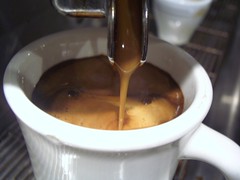
americano pullImage by tonx via Flickr


Yes, a home espresso machine may be a little bit of an investment, but it is quite worthwhile if you are someone that regularly indulges in a cup of coffee. Just to clarify, many people don't realize that you can brew coffee on a home espresso machine, where it will either have a setting for coffee, or you can create an Americano by adding hot water to a shot of espresso. Now that we have that settled, we can move on to the benefits of having a home espresso machine.

The first question to ask yourself is what kind of espresso drink you normally enjoy? If you are someone who drinks a plain shot of espresso often, you may want a manual espresso machine that allows you the control over your extraction to create your own delicious shot every time. However, if you prefer more of the traditional Starbucks variety of lattes or cappuccinos, then you will want a semi-automatic or preferably, super automatic espresso machine that will create your entire espresso beverage for you, including foaming the milk. What a luxury!

It is also important to take into consideration how much you will be drinking on a daily basis. If this is for yourself and friends and family, you may want a larger machine that is capable of brewing more in one period of time. There is nothing more frustrating than waiting for your tiny home espresso machine to warm up if you are trying to brew five different shots of espresso for your family. In that case, you may again want to try a super automatic espresso machine, where you can brew several cappuccinos back to back to back for any friends or family that you are enjoying your drink with. However, if it is just you brewing espresso for yourself a few times a week, then a smaller and less expensive machine will be ideal since it will only need to perform for one individual.

With those considerations in mind, it is also highly important to think about the cleanup of your machine. It's not necessarily going to clean itself, unless you have a super automatic espresso machine... Many super automatic espresso machine have self-cleaning capabilities, where the espresso puck that has been extracted will be discarded into an inner drop box for you to dispose of after it is full. Furthermore, these super automatic espresso machines will also alert you when the dump box or drop box is full so that you can empty the discarded pucks and keep your machine in the best working order. Depending upon the brand that you choose, many also have a self-cleaning feature, which will take care of the regular maintenance of your espresso machine for you.

A super automatic espresso machine is often somewhat more expensive than a manual or semi-automatic variety, but it is well worth the investment if you are a regular espresso lover and want to save money instead of going to Starbucks every single day!


Author Resource:-> Mark Ramos is a coffee geek. For a great selection in all things coffee, espresso machines and BUNN coffee makers, check out The Coffee Bump.

Article From Article Storehouse

Search Amazon.com for vino con vista


Reblog this post [with Zemanta]

"Citylife" Park in Milan

Italy, Milano / Mailand, Teatro alla ScalaImage via Wikipedia

By Guido Alliata


The machine was set in motion. The brains went into action. The creative capacity of the Milanese is ready to be tested. Carlo Masseroli, Consultant for the Development Planning of the City of Milan, has thrown the stone, we will see who will collect it.

There is every intention to continue the park project "CityLife", for the construction of which it is required a direct intervention of the ideas of those invited to redevelop certain areas of the city.

Later this year, just before December 2010, the final draft should be drawn. A total number of five designers will be involved in this delicate operation, before the final decision is made by the commission appointed by the City of Milan.

What will emerge will be a park of about 55.000 square meters, to be included within an area of 170,000 square meters with a construction cost of approximately 17 million euros. These, in essence, the numbers operation. The Assessor is proud of what will become the largest pedestrian area in Europe.

The deadline for submitting applications is June 30. On July 9, the appointed designers will be selected.

Certainly the work will be neither easy nor of fast implementation. It is believed that the first section of the park, and only one, will be completed within two and a half years. The leaders have also had to revise the target set within the urban agglomerations, which have in fact undergone a change of direction during the construction. The Milan city direction, given the economic crisis that Italy is experiencing, to allocate the skyscrapers planned in the park, more to residential solutions instead of offices. Most likely, therefore, in Citylife there will be an hotel and many new apartments, which manufacturers have already begun to sell in advance.

The new park to be implemented in the Fair area will also include recreational activities aimed at children, as the old exhibition hall will be renamed the "Palace of Sparks" and will be destined to become a cultural center dedicated mainly to children.

This is not the only work that the City of Milan is pursuing. Several projects are planned, some already begun, others to start, others only designed and presented. Well, Milan certainly is a city in ferment, ready to review the intended use of certain important areas, ready to transform the city center, to submit, to its citizens, strong projects that will change the face of the area permanently.

We'll see... continue to follow us on... http://www.rentclass.com.

Guido Alliata has been working in the Real Estate industry for the past 10 years. He has developed a strong experience in the business luxury end of the market, managing properties in the most important cities in the world. Rentclass, thanks to its founder established a network of agencies that make it possible to rent an apartment in London, Milan, Moscow, Paris... almost everywhere.

Article Source: http://EzineArticles.com/?expert=Guido_Alliata


Reblog this post [with Zemanta]